


Uncommon Accommodations
Try winter under canvas in one of Maine’s cozy yurt rentals.
If you spend the colder months wistfully glancing at your camping gear and dreaming of nights close to nature, you’ve been missing out on a winter adventure that encapsulates all the best elements of camping without the fear of frostbite. Explore a plethora of yurts available to rent all across Maine.
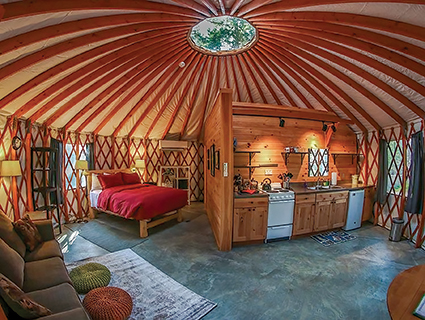
The traditional yurt structure creates a cozy circular sanctuary. Photo courtesy Acadia Yurts & Wellness Center
Made from a circular-shaped wooden latticework, covered in canvas and typically featuring a woodstove and chimney, the traditional yurt originated from Central Asia, where nomadic groups from Mongolia, Siberia, and Turkey created the structure – then covered it in animal hides – as a hardy yet moveable dwelling to traverse the steppes. The modern iteration can be found tucked away in nature all over Maine, providing an elevated kind of camping experience thanks to its roomy interior and heating capabilities. Many rentals across the state also enjoy proximity to the ocean or a trail network, offering the opportunity for winter walks, snowshoeing, and cross-country skiing before you settle into your digs for the night.
Even with a stove and a bed, you’re still just a sheet of canvas away from nature. Many yurt rentals will require you to light and maintain your own woodstove. Therefore, it’s essential that at least one member of your party has a working familiarity with wood-burning stoves. Once the stove is burning efficiently, you should stay cozy inside the structure. Nonetheless, it’s smart to bring your headlamps, camping gear, potable water, and your warmest clothing – even if it’s just so you can step outside and marvel at the brilliance of the night sky in winter.
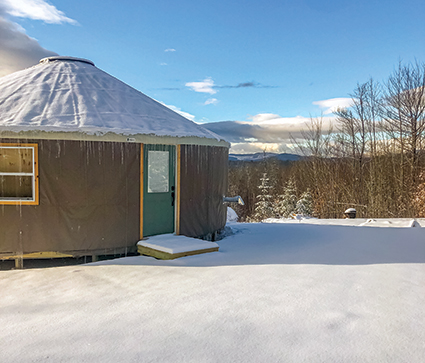
Birdsong Yurt boasts an expansive view across Maine’s
lakes region toward the slopes of Mount Abram’s ski area.
Photo courtesy Acadia Yurts & Wellness Center
Birdsong Yurt
Woodstock
$250-$265 per night
Perched on a granite outcrop overlooking the winter forest, Birdsong Yurt is a four-season yurt that melds the appeal of the great outdoors with some seriously luxurious amenities. Located in Woodstock and surrounded by mountains, including the far-off lights from Mount Abrams ski slopes, Birdsong is a romantic getaway for any sporty couple in search of winter adventure. The interior is a study in modern-rustic chic, complete with sliding barn doors, sage green kitchen cabinets, and mid-century furniture. “Guests staying at Birdsong yurt in the winter can expect a quiet and cozy stay,” said owner Shari Kilton. “We have a full kitchen and bathroom – so there’s no running out in the cold to an outhouse!” With a pellet stove, a king-sized bed, a television, and WiFi access, Birdsong ensures there’s no sense of “roughing it” for a night. But, that’s not all. Step outside and take your pick whether to admire the panoramic views from the raised deck, fire pit, or – most decadently – the hot tub. After a long day on the slopes of Mount Abram or Sunday River, there’s no sweeter place to return.
Maine Forest Yurts
Durham
$150 per night
A family of winter enthusiasts can find all the activities and accommodations they could imagine on the banks of Runaround Pond in Durham. Maine Forest Yurts operates a year-round campground with four large yurts and more than 100 acres of wilderness just waiting for exploration. Pack your cross-country skis and snowshoes and hit the trails or glide across the pond on skates. No matter how you spend your time, the comforts of either Fisher Ridge, Hemlock Ridge, Hideaway, or Zen Den yurts will welcome and warm you after a long day in the crisp winter air. Each yurt comes fully furnished with a kitchen, composting toilet, and woodstove amenities. The simple and spacious interior is laid with pine flooring and furnished with bunk beds, a futon, and a dining table. The setup is dog-friendly, so the entire family can vacation together.
Sugar Ridge Yurt
Hidden Valley, Jefferson
From $96 per night
Tucked away on a ridge in the forested preserve on the banks of Little Dyer Pond, Sugar Ridge Yurt is one of a handful of rustic cabin and tent sites managed by the Hidden Valley Nature Center. A thousand-acre parcel of contiguous forest, Hidden Valley is an important site of environmental education and recreation in Midcoast Maine, hosting student research, sustainable forestry, and avid trail runners. An overnight stay at Sugar Ridge offers a rare chance to immerse yourself in the beauty of this landscape. The yurt is accessed by a half-mile walk or ski along groomed trails through woodland and along waterways. The yurt setup contains four bunk beds, making it the perfect affordable winter escape for a group of friends in search of a quiet night in nature. Just make sure you come prepared: the woodstove is the only heat source and amenities are limited to an outhouse. Those willing to tough it out will be rewarded with a night sky that is free from light pollution and a perfect winter morning waking up among evergreens and the snow.
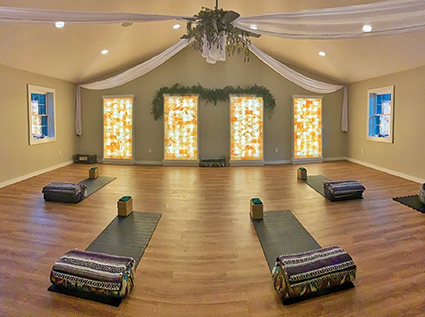
AYW hosts yoga classes, sauna, and
massage services to elevate the yurt experience.
Photo courtesy Acadia Yurts & Wellness Center
Frost Mountain Yurts Brownfield
$125 to $140 per night
Frost Mountain owner Scott Moulton describes a stay in his six all-season yurts as “camping at its finest,” allowing you to enjoy the outdoor experience without “lugging in any of the equipment.” Located on 57 acres of wooded hills just south of Fryeburg and a short drive from Mount Washington Valley, Frost Mountain has six pet-friendly yurts tucked away among the trees. Each includes three bunk beds and two pull-out couches, making them well-suited to larger groups. The yurts are well stocked with a woodstove, gas stove and grill, and kitchen utensils should you feel like rustling up a feast, although you’ll need to be comfortable without running water and electricity (gas lamps provided). Once you’re settled, you won’t need your car to access winter activities. Frost Mountain includes a private network of XC ski and snowshoe trails, as well as “great sledding in the field through the apple trees,” according to Moulton. “We’re also directly connected to the international snowmobile trail network that is open to skiers and trekkers for longer loops.” Only one mile down the road you’ll discover the trailhead for Peary Mountain and a panoramic view of Mount Washington and the Presidential Range.

Premium yurts include a full bath and kitchen, WiFi, and
generous amenities. Photo courtesy Acadia Yurts & Wellness Center
Acadia Yurts & Wellness Center
Southwest Harbor
From $181 to $221 per night
Experience Mount Desert Island from a different perspective. Acadia Yurts combines earthy accommodations with the luxury of a wellness center, featuring onsite massages, a yoga room, an infrared sauna, and even a flotation room! Opt for ultimate comfort with Acadia’s exclusive 30-foot yurt, resplendent with colorful furnishings and generous amenities, including both an enclosed and a lofted bedroom, full kitchen, and bathroom – and perhaps most luxurious, a dishwasher. Alternatively, there are four 24-foot yurt rentals that certainly won’t make you feel like you’re slumming it. Each has room for four people, as well as a full bathroom and kitchenette. Located in the heart of Seal Cove, you’re just minutes from the coast and all of the vistas and natural glory that MDI has to offer.
Story by Saisie Moore. Saisie is a freelance writer and editor living in Portland, Maine.
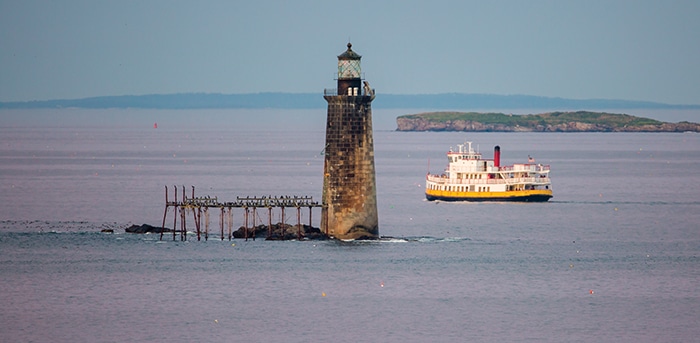
When in Portland…
Be sure to check out these great businesses for adventurous activities and delicious food!
Maximize your sightseeing in Portland and save money with one of Portland Discovery’s exceptional combo tours! Simply choose a cruise and combine it with a trolley tour for a fabulous land and sea adventure! Take the tours in any way that fits your schedule, just be sure that when you choose your times that the boat tour and city tour times don’t overlap. For example, many people will choose the 10:00 a.m. Portland City and Lighthouse Tour then enjoy lunch and shopping in the Old Port before boarding an afternoon cruise. To see the best of Portland, visit Portlanddiscovery.com or call 207-774-0808.
Portland Paddle offers guided sea kayaking trips and paddleboard rentals at the East End Beach on the Portland waterfront. It’s amazing how rugged and wild the coastline gets just a short paddle away from the bustling Portland harbor.
The great variety of islands in Casco Bay offer endless possibilities for exploration. Look out for seals, lighthouses, wave-battered cliffs, seabirds, hidden beaches, wooden schooners, and 19th-century granite forts. Portland Paddle’s guided trips and lessons are led by licensed Maine Guides who are passionate about sharing their love of sea kayaking and their knowledge of the history and ecology of the Maine coast. Multi-day trips, advanced paddling lessons, and rentals are also offered at Portland Paddle.
The Great Lost Bear has been a Portland institution since opening in 1979. The Bear is located about two miles from Portland’s touristy Old Port but well worth the journey across town to the mysterious Woodfords Corner. The Great Lost Bear features an enormous, eclectic family-friendly menu with something for everyone, all served in an entertaining atmosphere. They have added more taps as new breweries open throughout the Northeast. Now, with the craft beer revolution in full throttle, GLB offers an amazing selection of hard-to-find beers with most of them brewed in Maine. Come taste some of the freshest local beer around at the GLB!
Portland Schooner Company has been making memories for Casco Bay visitors since 2002. Owned and operated by husband and wife team, Scott Reischmann and Michelle Thresher, they offer an authentic, Old World sailing experience from May through October aboard Portland’s only historic windjammers. Whether you’re looking to experience the Portland waterfront from a unique perspective or just hoping to step back to a simpler time for a couple hours, Portland Schooner Company offers an experience you don’t want to miss.
The adventure begins aboard one of their classic wooden schooners, Wendameen or Bagheera. Listed on the National Register of Historic Places, both schooners were designed by famed naval architect, John G. Alden, in the early 1900s and built by some of the best craftsmen in the world at the shipyards of East Boothbay, Maine. Two-hour sails depart from the Maine State Pier in Portland’s Old Port and are offered four times daily, presenting visitors with a perfect vantage point for viewing Portland’s unforgettable sights and sounds – from lighthouses and seabirds to seals and the rocky coastline. The friendly, professional crew is not only there to provide you with a safe trip … they’re happy to share a bit of Casco Bay history and trivia. You’re invited to join in any way you’d like: hoisting the sails alongside a deckhand, taking a turn at the ship’s wheel, or just relaxing and enjoying the ocean breeze and salt air. And you’re welcome to bring food and drink, including beer and wine, aboard. Though not required, reservations are strongly encouraged.
If you’ve got more time to spend on Casco Bay, Portland Schooner Company also offers charters for family or corporate functions, lunchtime lobster bakes on scenic Cow Island, and overnight excursions where you can spend an evening nestled in a quiet island anchorage.
Kon Asian Bistro has a unique modern look and features 10 hibachi tables with amazing entertainment as your meals are prepared right in front of you. They also have a private party room available.
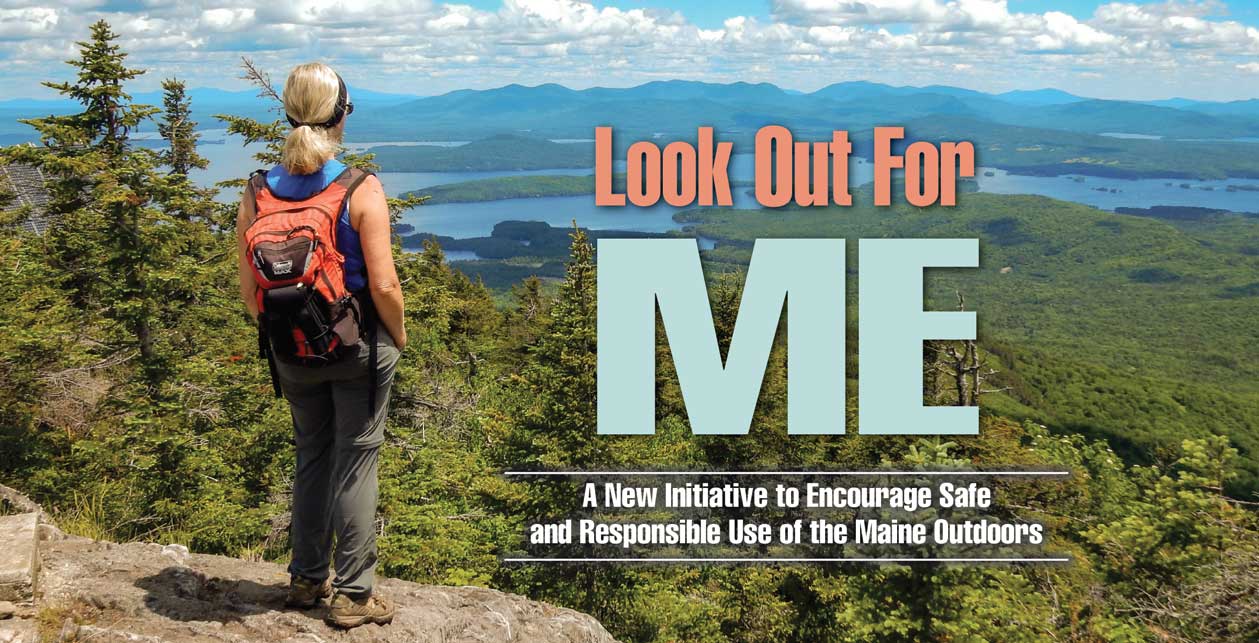
Safe and Responsible Use of the Maine Outdoors
Over the last several years there has been an enormous surge in the recreational use of the Maine outdoors, from the rocky coast to the big woods to the mountain peaks. More people of all ages, interests, and abilities than ever before have discovered the health and fitness benefits of time well spent exercising and having fun in the woods and on the waters of our beautiful Pine Tree State.
But there are downsides to this recreation boom, like overcrowded beaches, jammed parking lots, unauthorized campfires, trashed campsites, and a marked increase in trail erosion. There’s more garbage and litter, unwanted noise, improper disposal of human and pet waste, and an alarming rise in emergency calls and rescues.

Enjoying a beautiful afternoon on the West Branch of the Penobscot River.
These unfortunate problems are negatively impacting our natural resources, degrading the experience for visitors and residents alike, and causing considerable distress among land managers, property owners, and tourism officials, becoming a wholly unsustainable situation.
“After COVID-19 hit and the pandemic continued to spread, we saw an enormous rise in the number of people out there, reports of property damage, the many complaints and concerns,” said Steve Lyons, the director of Maine’s Office of Tourism. “About 95 percent of Maine’s forest land is privately owned and about half of that is open to the public through the generosity of the landowners. When the Maine Warden Service reported a substantial increase in landowner requests for “Access By Permission Only” signs, it was a clear indication of concern over user numbers and behavior.
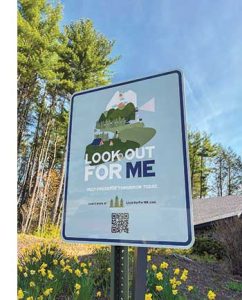
Sign at Maine Turnpike Kittery rest area.
That’s when outdoor and tourism leaders around the state rallied together and approached the MOT to develop a message to help ameliorate the problems. The result was the Look Out for ME campaign, the goal of which is “to ensure that visitors and residents alike venture out safely and responsibly with a great respect for the land we all love and cherish.” Per MOT’s website, the initiative is a blueprint for “how we can all do our part to conserve the state’s natural resources, season after season, and for generations to come.”
The Look Out for ME message is pretty straightforward:
Check out your intended destination in advance and know the rules and regulations. Travel only on designated trails and roads. Visit places outside of peak hours and always have a Plan B to avoid disappointment. Don’t transport firewood and clean and dry your boots and boats to reduce the spread of invasive species. Be careful with fire, use only designated sites, and don’t harm green trees.
But wait, there’s more.
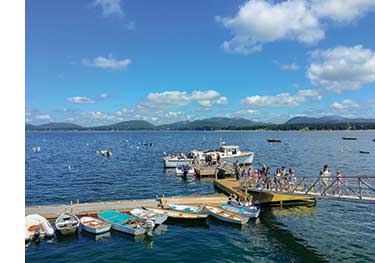
The Cranberry Cove Ferry leads to
great adventure on Great Cranberry Island.
Don’t litter, pack out your garbage and that of others less thoughtful. Bag and dispose of your dog’s waste similarly. Practice proper hygiene: know how and where to dig a cat hole for poop and take the used toilet paper and wipes out with you in a plastic bag. Be personally prepared by carrying the “Ten Essentials” (a handful of emergency items that should always be in your pack). Choose an activity that fits your experience and fitness level and let someone responsible at home know your plans.
Prepare For Getting Lost or Injured
There are a lot of people in the Maine woods these days trying a host of recreational activities for the first time and they are often approaching these pursuits unprepared and getting into trouble. This poses an undue risk for the enthusiasts themselves, impacts the environment, and creates extra headaches for land managers and public safety officials.

The sand and gravel beach at Lily Bay State Park is a fun place on a summer day, with a great view to boot.
“Maine is a big, beautiful place,” said Andy Cutko, the Director of the Maine Bureau of Parks and Lands. “But it’s also remote and wild, so it’s far too easy to get into trouble if you aren’t properly prepared, and help can be a long way off in terms of both hours and miles.”
Based on trends in campground reservations to date, Cutko expects that 2022 will be another record year in the Maine outdoors and he’s hoping that the Look Out for ME effort will be a big help in getting the message out to visitors, preferably well in advance of when they get here.
“We want people to enjoy the outdoors safely and responsibly, and to leave the state better than when they arrived,” said Lyons.
That’s a good thing for Maine, Mainers, and visitors alike, now and for future generations. Look Out for ME is another important step in striving to achieve a healthy and sustainable balance of tourism, natural resources, economic development, and residential quality of life. Let’s all do our part.
LOOK OUT FOR ME
To learn more about Look Out for ME, find great resources for planning a safe, responsible, and enjoyable outdoor adventure, and discover ways you can help spread the word, visit the Maine Office of Tourism at visitmaine.com/look-out-for-me.
Story and Photos by Carey Kish of Mt. Desert Island, ME. Cary is freelance writer, avid hiker and beer drinker, and the author of the new book, Beer Hiking New England (available later this year).

Explore Maine’s Wilderness with a Scavenger Hunt
A trail winds through the woods, around clusters of swaying ferns and lichen-covered boulders. Golden mushrooms dot the mossy forest floor. And a brown bird with a speckled chest sings an ethereal tune.
The Maine wilderness is full of diverse beauty. Every delicate wildflower and fluttering butterfly has a name and story. If you’re trying to learn more about nature, it can sometimes be overwhelming. Where do you even start?
How About a Game?
Outdoor scavenger hunts can help you become better acquainted with nature while honing your observation skills. They’re also a great activity for children, keeping them active and engaged while spending time outside.
How to Create an Outdoor Scavenger Hunt

Outdoor scavenger hunts are easy to create for any season.
You can organize them in a grid format and play the game
similar to how you’d play Bingo.
Outdoor scavenger hunts can be designed for any age group or skill level. While some involve hiding objects, such as an Easter egg hunt, others are simply about finding items that already exist in nature, such as plants, rocks, and seashells. You don’t even need to know the names of plants and animals to create one. For example, design a hunt in which you search for the colors of the rainbow in nature. Or look for different shapes, textures, or aromas. You can even create an outdoor scavenger hunt using different household items, according to Hazel Stark, co-founder of the Maine Outdoor School.
“Bring out a Q-tip or toothbrush, then try to find something in nature that matches the shape or reminds you of the item,” said Stark.
During the hunt, one person can verbally announce items for everyone to find – one at a time – or participants can carry a visual reference such as a list or grid of items on a sheet of paper.
“It can be like scavenger hunt bingo where you try to find all the things on the sheet or five in a row,” said Stark. “That tends to work best for kids who need a little more motivation. It’s a bit of an incentive because they want to win.”
Creating a scavenger hunt sheet can be a fun art project and an opportunity for learning vocabulary words. Children who haven’t yet learned to read can represent items with photos or pictures. And don’t forget to leave some room on the sheet to write notes or draw pictures of what you find in nature.
Ideal Scavenger Hunt Locations
Any outdoor space, whether it’s a vast tract of forestland or a tiny, fenced-in backyard, can serve as a wonderful place for an outdoor scavenger hunt.
Having a scavenger hunt in your backyard or at a local park can help you develop a greater sense of place right at home. The game might lead you to notice a bird’s nest under your porch or a patch of wildflowers in your yard that you never noticed before.
“It’s a cool way to get people to start to notice details and distinctions in nature, which is the first step to realizing that there’s a lot of diversity out there,” said Stark. “If you have any interest in foraging or hunting or anything like that, you have to develop skills in observation.”

Willamina writes down what she notices about a cluster of ferns during the scavenger hunt.
A scavenger hunt played away from home can be especially exciting because it may introduce you to new habitats and species. And because it’s such a low-impact game, it can be played in just about any public outdoor destination. In fact, a scavenger hunt is a great way to keep children happy while walking on hiking trails, though the family-friendly activity may slow your pace.
If visiting a public property to conduct your scavenger hunt, be sure to follow posted rules or guidelines. Many property owners ask that you remain on established trails at all times. So, while you’re searching for something in nature that’s “squishy” or “star-shaped,” be sure not to wander off the beaten path.
Scavenger Hunt Rules
When playing a game, it’s easy to get caught up in the task at hand. But it’s important to keep a few rules in mind – and communicate those rules with everyone who is participating in the scavenger hunt.
Chiefly, try to leave the wilderness as you found it. Or, if you find some trash to pick up, make that part of the rules that you leave the wilderness even better than you found it.
“When out in nature, we’re not picking anything or ripping leaves off plants,” said Jessica Decke, camp director of Tanglewood 4-H Camp and Learning Centers in Lincolnville. “We’re handling things with care and being mindful about where we put our feet down so we don’t trample anything.”
At Tanglewood, campers often participate in scavenger hunts and other activities that strengthen observation skills. As a part of those exercises, children are taught Leave No Trace principles so they can reduce their impact on the environment.
Among those principles is the directive to respect wildlife as well as other people who are enjoying the same outdoor location as you. You can do this by keeping your voice down and giving everyone plenty of space.
During the hunt, you can record your discoveries by taking photos, sketching pictures, writing down notes, or simply checking off items on your sheet. And at the end of the game, everyone can come together and share what they’ve found.
Aislinn Sarnacki is a registered Maine guide and the author of three hiking guidebooks, Family-Friendly Hikes in Maine, Maine Hikes Off the Beaten Path, and Dog-Friendly Hikes in Maine. Follow her writing, photography, and guiding services at www.mainenaturehikes.com.

6 Places to Reconnect with Nature
It’s no secret that being out in nature calms us, but many of us spend hours indoors, staring at screens, away from natural light. While there is much focus on the physical consequences of this lifestyle—heart health, obesity, and muscle strain—not enough emphasis is put on its effects on our mental health.
Studies have shown that too much screen time and lack of natural light can lead to depression, cause anxiety, and deplete both empathy and altruism. Just 30 minutes of exposure to nature—a quiet walk in a park, sitting in a garden, or looking at a panoramic view—can significantly reduce levels of the stress hormone cortisol.
Stress, depression, and anxiety are risk factors for serious mental health issues. But spending time reconnecting with nature can soothe stress and get you back to feeling your best.
Stunning coastlines, lush forests, crystal lakes, and cascading waterfalls offer countless opportunities to connect with nature and soothe the soul. Here are six.

Camden Hills State Park

Rattlesnake Pool
1. Mount Katahdin, Baxter State Park
Maine’s highest mountain peak, Mount Katahdin, is more than 5,000 feet tall and as breathtaking from the ground as it is from the summit. The elevation and weather can make it a challenging hike, but even being in its presence is enough to rejuvenate the soul and free the mind.
The magical Vaughn Woods, located in Hallowell, is often nicknamed ‘Hobbitland’ because it resembles the incredible descriptions of J.R.R. Tolkien’s Shire hobbit homeland. This beautiful nature reserve has many trails lined with red oaks, white pines, beech trees, and hemlocks. Each season offers a different activity, but it’s ideal for summer picnics. The fresh air will go a long way to clear a busy mind.
3. Camden Hills State Park, Camden
Just a short drive up the coast from Camden, this nature-lover’s paradise is gorgeous in any season. Hike the trails and marvel at the breathtaking views of Camden Harbor and Penobscot Bay. Follow in the footsteps of renowned poet Edna St. Vincent Millay who penned “Renascence,” after her own visit here. What will the trails inspire you to create?
Located in Evan’s Notch, Rattlesnake Pool is a granite bowl that has been patiently flensed from the solid rock over millennia by the running waters, pebbles, and stones. The water is crystal clear and icy cold. The mosses lining the base have given it the nickname of the Emerald Pool. Although the water is frigid year-round, that hasn’t stopped it from becoming a popular swimming hole; an icy dip can do wonders for the mind. Nearby waterfalls add a beautiful soundtrack to complete the ultimate sensory experience.
5. The Bar Island Trail, Bar Island
Explore this 2.1-mile out-and-back trail near Bar Harbor, Maine. While only accessible during low tide, the Bar Island Trail is worth the trip. Its rock pools teem with small sea life and its sand bar makes the terrain soft and easy on the feet. There is nothing like feeling beach sand between your toes as cool water surrounds them.
6. Smalls Falls, West Central Franklin
Located on the Sandy River, Smalls Falls—one more than 100 waterfalls in Maine—is easily accessible, allowing a whole day of indulging in nature’s beauty. There are multiple falls, but the main one features a 54-foot drop. The sound of the cascading water, the feel of the spray, and the view of the natural beauty make this a sensory smorgasbord.
Maine offers an array of locations to get back to nature and soothe your tired soul. Taking time for self-care and mindfulness will go along to make your life’s journey less treacherous.
— Story & Photos: Stephen Bitsoli.
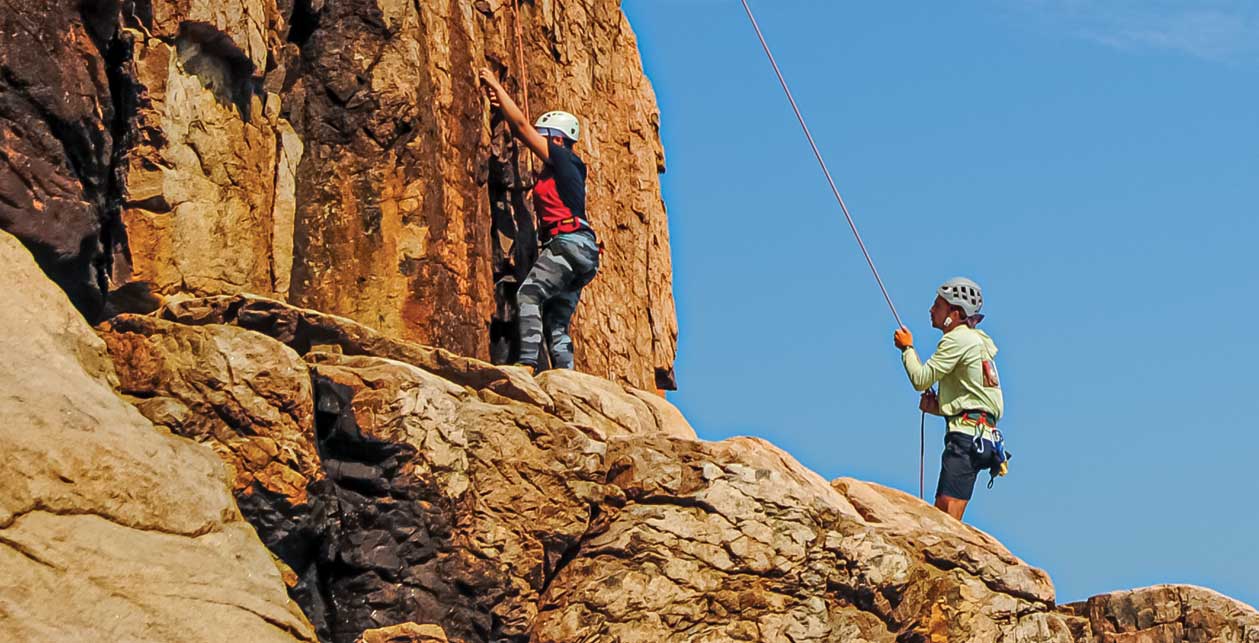
The Only Way is UP
Learn the ropes of outdoor rock climbing and explore Maine’s craggy beauty up close.
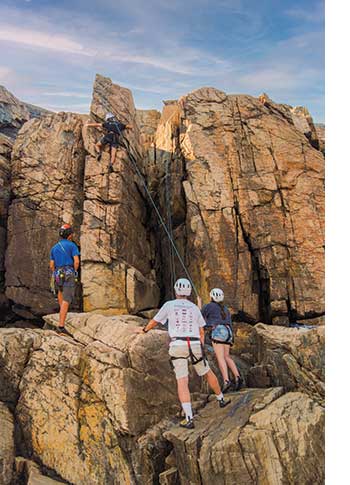 The rugged beauty of Maine’s landscape offers a generous and diverse array of climbing opportunities, from coastal crags to granite slabs. Don’t let the gear, jargon, or even heights intimidate you. With the right guidance and preparation, outdoor rock climbing can be an accessible and exhilarating experience for family members of every skill level. In return, you’ll discover a sport that offers a hugely rewarding physical and mental workout that also happens to bring you face-to-face with the wild beauty of Maine without disrupting its wildlife or natural ecosystem.
Whether you’re a total beginner or a seasoned indoor climbing enthusiast, the rock gym is the first step in your climbing journey. EVO Rock Gym and Fitness Center, located on Warren Avenue in Portland, opened in 2015 as an evolution of the former Maine Rock Gym organization. Its knowledgeable staff can introduce you to the gear and how to keep safe. First-timers will have to complete an introductory course and pass a belay test to learn how to safely secure a climbing harness and keep a partner safe on a top rope. With the right experience under your belt (or harness), you can sign up for EVO’s Gym-to-Crag courses, specifically designed to transition indoor climbers to outdoor settings. From top-rope anchors to rappelling, students can gain confidence in essential skills.
According to EVO, “Climbing outside is an amazing, expanding experience and is highly recommended for all climbers. Gym-to-Crag sessions focus on moving from the gym to the outdoor realm.”
Equinox Guiding Service unites a collection of passionate local guides with a wealth of experience to lead climbers of all abilities on adventures in Camden, “where the mountains meet the sea,” and in areas of Acadia National Park. The full- and half-day excursions are pitched at all levels, including beginner’s classes, guided tours for visiting climbers, and even ice climbing in the winter. Camden Hills State Park offers a friendly introduction to the sport just a couple of miles from downtown, making it a unique and accessible day trip activity. In addition, young enthusiasts can take advantage of the summer climbing program to immerse themselves in the sport and local climbing community. “This year we’re offering a summer camp for kids,” says Equinox Guide Noah Kleiner. “Running five afternoons a week through July, it’s a great opportunity for kids to experience climbing first-hand.”
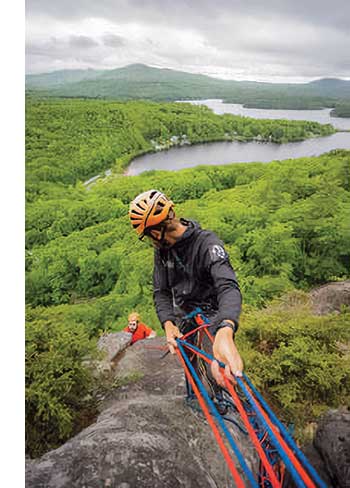 Further Downeast, Acadia Mountain Guides Climbing School is the one-stop destination for all aspects of climbing, from learning the ropes to avalanche education and wilderness medicine. Founded in 1993, the school is run by Jon Tierney, Maine’s only fully-credentialed rock climbing, alpine, and ski mountaineering guide. The school runs two offices in Bar Harbor and Orono, but its fully trained guides travel around Acadia and across the state to lead climbing and wilderness excursions throughout the year. First-timers are welcome and well-catered to by Tierney’s team of skilled staff. “Anybody can climb!” he says. “It’s our job to find the terrain where everyone can be successful, where a whole family can have a good time. We work hard to find those spots that offer a great experience for everyone.” Classes might begin from the base of the cliff or with a rappel, all essential skills students will practice with their guides in advance. With the support of your guide and their instruction, even the wariest beginner can thrive on the rocks. “There’s risk in climbing, but there’s risk in everything,” says Tierney. “People generally fear things they don’t understand – but a little education dispels that.”
If you’re in Acadia this summer, AMGCS offers half-day adventures on the island’s coastal cliffs, where every climbing hold offers a postcard-perfect view. Full-day classes can be booked at sites across the state, in locations such as Bethel, Greenville, and The Forks. You don’t even have to venture too far off the beaten path with climbing opportunities in North Conway, Camden, and Clifton.
 “Most people don’t realize there’s great climbing only 20 minutes outside of Bangor,” says Tierney. The guides ensure each participant is outfitted out with the right gear before getting started, including a hard helmet, a fitted harness, and climbing shoes.
Your instructor will familiarize you with the ropes and belay devices that will keep you safe. “We take a holistic approach to climbing,” says Tierney. “It’s about more than just getting up the rocks. We teach students how belay and rappelling work so they can take the skills home with them.” Your day will be spent up close and personal with the rugged splendor of nature and Maine’s breathtaking scenery – each new hold rewarding you with a higher vantage. Even better, climbing is a low-impact sport that can be enjoyed in relative harmony with nature.
The world of outdoor climbing is a dizzying one, filled with technical terms and gear used by passionate people who travel the world for the sport. But it’s also a welcoming and supportive community where families can start at the bottom as beginners and bond on the journey to the top.
Story by Saisie Moore. Saisie is a freelance writer and editor based in Portland, Maine.
Cultivating Culture: Supporting Maine’s Farmers Through Agritourism
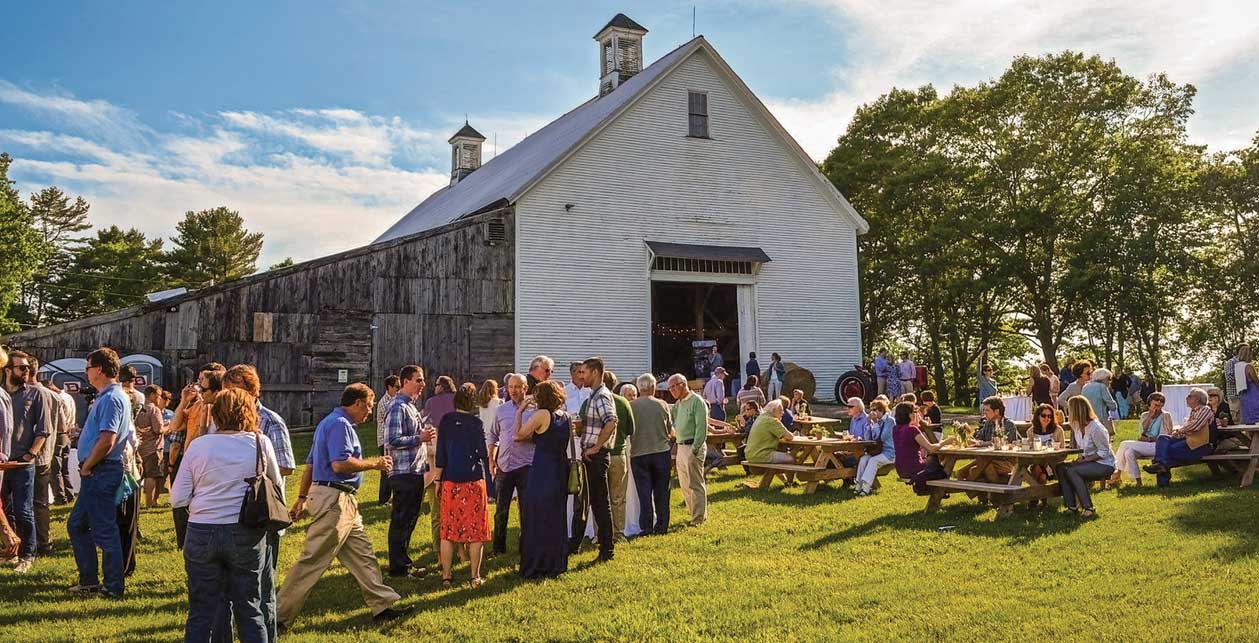
It’s no secret that Maine provides ample opportunities for both tourists and locals to explore and embrace its resources. The state’s craft beer industry has exploded into near worldwide acclaim over the last decade. The foodie movement has transformed the restaurant and social scene, especially in places like Portland. And, of course, we have the beautiful natural environment to make any city-slicker pause in awe. Another particular natural environment has been trending lately for both tourists and locals alike, and it is not the mountains or the rocky coast. Instead, it’s a space that makes great beer and food possible to fuel such an industry—farms.

Photo: Wolfe’s Neck Center
Farms are such a huge part of what makes Maine unique. More and more folks seem to want more than just a lobster roll and a lighthouse. On the Maine Organic Farmers and Gardeners Association’s (MOFGA) website, Jo Anne Bander wrote in 2008, “For tourists and Maine urbanites alike, agritourism is a way to get back to the land, learn how food is grown, and support local farms.” In the last five to 10 years, agritourism in Maine has really begun to blossom.
Farmers can participate in agritourism in a variety of ways such as having a pick-your-own field, hosting farming workshops, renting an Airbnb, or offering kid-friendly options such as petting zoos or wagon rides.
“I encourage farmers to consider some piece of agritourism,” said MOFGA’s Organic Marketing and Business Specialist Nicolas Lindolm. “It’s another way for a farmer to make money that’s not always dependent on the weather or a good crop yield. Agritourism requires a definite desire to be with people, which is a huge aspect.”
Lindolm has been an organic wild blueberry farmer (Blue Hill Berry Co.) for 25 years and recently took part in the first Wild Blueberry Weekend this August, along with 19 other farms. “Nearly 50 people came to the event to pick their own berries,” said Lindolm. “It was really great because we’re the only state in the nation that has a wild blueberry industry. We’ve never had a tourist-based farm event for wild blueberries before.”

The Department of Agriculture and the Wild Blueberry Commission of Maine hosted the events in places such as Portland, Wiscasset, and Penobscot, and several restaurants, breweries, and wineries showcased food and beverages made from wild blueberries.
Brodis Blueberries from Hope, Maine, also took part in the Wild Blueberry Weekend and had guest speakers and book readings. They also share a space with Blue Barren Distillery, which makes a blueberry brandy called the Eau de Vie.
Wolfe’s Neck in Freeport embraces several aspects of agritourism year-round. People can go camping on the oceanfront in their award-winning campground, which is also located near the farm operations. They also offer several educational opportunities for both adults and children, including a summer camp for ages five to 15. For a small fee, families can take their kids on a wagon ride around the grounds to see the animal barns and the milk plant.
“Our mission is to connect people with food and farming for a healthier planet,” said Andrew Lombardi, the Events and Public Programs Manager. “We believe that giving people a chance to connect with their food creates a more engaged consumer when it comes to buying farm produce and meat.”
So, long term, will this trending agritourism eventually hatch a new generation of farmers? Lindolm is optimistic.

“Agritourism adds to the robust effort that is going on in the state,” he said. “It has a good future if we can maintain the natural and human resources.” He also noted that there has been a heightened interest in farming curriculum programs from elementary school to the college level. “There are so many things that schools can learn from farming such as the economic influence, public health, and environmental factors like climate change,” he said.
Lombardi claims that he is already seeing such a renewed interest in farming with kids. “Wolfe’s Neck is truly a part of our local community,” he noted. “Kids grow up petting sheep and picking up chickens, and then they turn into our future farm camp counselors.”
Our breweries also support local farms. Maine Beer Company partners with Wolfe’s Neck for events and includes the farm in their altruistic efforts.
Clearly, Maine’s farms go way beyond cultivating crops. If you are interested in seeing what our local farms have to offer, the Maine Department of Agriculture, Conservation, and Forestry has compiled a Maine agritourism map. For more information, visit Maine Agritourism.
John Breerwood has been magazine writing for more than ten years and enjoying the outdoors since childhood. He currently resides in Topsham, Maine. He teaches English at Lewiston High School, and just recently published his first novel, Sinking Dixie, last year.

Back to the Backcountry
Backcountry skiing has surged in popularity over the last few years. The pandemic likely had something to do with firing up this trend, as well as general crowding and the increasing expense of alpine skiing resorts. Whatever drives people into the backcountry, more skiers are sampling the thrill of skiing raw, ungroomed terrain.

Ann Marie Rintz checking conditions before making her ascent.
When most think of backcountry skiing, they think of New Hampshire’s Mount Washington, especially Tuckerman Ravine. This is undoubtedly the epicenter of ski touring in New England. There are many other storied ski tours and descents throughout the White Mountains, but that doesn’t mean it’s the only place for solid backcountry skiing. Maine holds its own when it comes to earning your turns.
Skiing Along the Coast
Sargent Mountain, the second-highest peak within Acadia National Park, behind the immensely popular Cadillac Mountain, will reward you with a nice solid ski tour, as well as views of the surrounding Atlantic. There are a couple of routes to the top, ranging from about a three-mile more direct route to a longer, but gentler, six-mile tour. You can begin this tour from the Parkman Mountain parking lot, just north of Upper Hadlock Pond.
Watch the snow conditions, as there are no recorded snow reports for backcountry skiing. There’s no snowmaking in the backcountry, so right after a storm is when you’re likely to find the best snow. And it can be even harder on a mountain like Sargent perched right along the coast. From the top of the mountain, you’ll find several snowfields (when there has been sufficient snowfall) dropping off the northeast side of the mountain. Make your way down to the carriage trails through the snowfields and the trees.
Check with local outfitters such as Acadia Mountain Guides to learn more about the possibility of guided trips up and around Sargent Mountain. They’re not on the regular menu, but they might be able to make some arrangements. Acadia Mountain Guides also provide avalanche-training courses. Avalanches may not be something you think of in New England, but if you’re going to be out in the backcountry during winter, it’s best to be prepared. Also, check with Cadillac Mountain Sports for good local intel and any gear you might need.

View from atop Ragged Mountain in the Camden Hills.
The Great Mountain
And of course, the mighty Katahdin looms as a distant and formidable backcountry skiing destination. For newbies, this might not be your first choice for a backcountry tour as getting that deep into Baxter during winter is already a marathon. And you will likely be carrying your own sled filled with food, water, and camping gear. Though, if adventure and earning your turns appeals to you, put Katahdin on your list as a worthy goal.
You can get to most of the skiable chutes on Katahdin from the Roaring Brook and Chimney Pond campgrounds. Plan on spending at least the night before and the night after at one of those spots. From Roaring Brook, you can get to the formidable Cathedral Trail. Be ready for this exceptionally steep ascent and descent. From Chimney Pond, you could try the Saddle Trail. This one is less steep than the daunting Cathedral Trail, but takes you on a longer excursion.

Hiking across peaks in search of skiable terrain in Western Maine.
Ski the Sidecountry
Sidecountry is the new backcountry. That’s a relatively new term for ski area backcountry skiing, where the access is a bit easier and less remote. For several years now, Sugarloaf has offered skiing on Burnt Mountain and Brackett Basin. These areas include more than 650 acres of raw, ungroomed terrain, and an excellent introduction to backcountry skiing. You’ll still have to take all the necessary precautions, but the trip will require less logistical effort. You will still be treated to fresh snow (on a perfect day), big backcountry bumps, glades, steeps, and streambeds.
You could also get there by booking a cat trip with Burnt Mountain Cat Skiing. These cats take you out 1.5 miles to the top of Burnt Mountain. Then you’ll have about 100 acres of terrain to explore. It’s not true backcountry skiing, but will certainly give you a taste. Be mindful of the ski area boundaries and don’t start any excursion out to Burnt Mountain or Brackett Basin alone or late in the day. Both Sugarloaf and Sunday River also have uphill skiing policies, so you can earn your turns even when the lifts are running. Contact the mountains for the latest routes and rates.
Be Prepared
Backcountry skiing encompasses everything about hiking, everything about skiing, and everything about being out in the woods and mountains in the winter. You need to be prepared in terms of skiing ability, physical conditioning, and having the right gear.
There are many “Essential Gear” lists out there, but the list compiled by HikeSafe certainly covers the basics: map, compass, warm clothing, extra food and water, flashlight or headlamp, matches, or other fire starter, whistle, weatherproof layers, and a pocket knife.
For other resources, check with Mahoosuc Mountain Sports, Maine Sport, or Cadillac Mountain Sports for more details on gear. And do yourself a favor and check out David Goodman’s definitive guide Best Backcountry Skiing in the Northeast.
Lafe Low is a veteran writer, editor, and webcast moderator. He has spent more than 30 years in technology and business journalism. He is also the founding editor of Explore New England magazine and former editor of Outdoor Adventure. He is the author of Best Tent Camping: New England, Best Hikes on the Appalachian Trail: New England, and 60 Hikes within 60 Miles of Boston, 2nd ed.

Escape to Moosehead!
Majestic Moosehead Lake, with its 400 miles of undeveloped shoreline, surrounding mountain peaks and expansive views, provides an inspiring backdrop to escape from the everyday fast pace of life. The winter months and the abundant snowfall open up a spectacular opportunity to explore back country trails and frozen water bodies. Wildlife abounds on our trails and it is common to see moose, deer, wild turkeys and many woodland animals up close and personal.
The surrounding townships of Greenville, Rockwood, Pittston Farm, Northeast Carry and Kokadjo and their clubs work in unison to maintain a world-class network of groomed snowmobile trails. Start your trip from any of these locations and loop through the wooded forests and enjoy convenient services and warm up stops along the way.

Big Squaw Mountain Ski Area. Photo courtesy of Serendipity Photography.
If manpower fun is your thing, Nordic and Cross Country trails are offered throughout the region. Groomed and marked ski and snowshoe trails can be found at Greenville’s Natural Resource Education Center (NREC), Big Squaw Mountain Ski Area, Appalachian Mountain Club (AMC) near Kokadjo and The Birches Resort in Rockwood. Each location offers a different type of terrain whether it be wooded, rolling streams, mountain or lake views.
When it comes to downhill skiing and boarding, views from Big Squaw Mountain Ski Area are some of the finest in the Eastern US! Located on the west shore of Moosehead Lake, this family ski area is only 5 miles from downtown Greenville and 13 miles from Rockwood. Lift ticket pricing remains affordable for young and old, thanks to the fundraising efforts of the non-profit 501c(3) Friends of Squaw Mountain. The base lodge is open to guests Friday-Sunday, 9am – 4pm, vacations and holidays. Here you will find a full service rental shop, ski/board school and snack bar with hot and cold food items. For more information visit skibigsquaw.com
More winter fun can be found in the Village of Greenville at the southern end of Moosehead Lake. Home to the quaintest shops, replenishing pubs and recreational services like the ice skating rink, Greenville is for snow lovers! Pick up the perfect souvenir and plan your next adventure. How about trying something new? Guided dog sled adventures and moose tours to find a fresh antler shed are offered daily.
Sportsmen favor the big lake and its many protected ponds near Moosehead for fishing action on the ice. Heated and equipped ice fishing shacks and gear are available to rent by the day. Enter one of our annual ice fishing derbies to add a friendly competition to your sport. You may win the big prize and help raise money to support the local causes of NREC and the Friends of Moosehead Lake.
Longstanding organizations like the Friends of Moosehead Lake have been established for nearly 60 years to help connect area businesses, non-profits, residents and visitors with the unique, natural landscape that makes Moosehead so unique. The tradition of sportsmen and vacationers to the Moosehead Lake Region is strong and our doors are open to offer hospitality to those seeking an inspiring destination to rejuvenate the soul. Check out rockwoodonmoosehead.org for area maps, activities and helpful links to help plan your Moosehead escape.

University of Maine at Farmington: Dominating the Slopes
Thanks to its perfect location at the gateway to the best alpine skiing, snowboarding, and Nordic skiing in Maine, it’s not surprising the University of Maine at Farmington (UMF) boasts several successful intercollegiate Snow Sports programs: Alpine Skiing (Giant Slalom and Slalom), Freeskiing (Rail, Slopestyle, Skiercross), Nordic Skiing, and Snowboarding (Rail, Slopestyle, Snowboardcross).
During the summer and fall months, UMF Snow Sports team members were putting in their dry-land training and are now out on the snow across the Northeast doing what they love.
UMaine Farmington Snow Sports teams are members of the United States Collegiate Ski & Snowboard Association (USCSA), U.S. Ski & Snowboard Association (USSA), Fédération Internationale de Ski (FIS), New England Nordic Ski Association (NENSA), U.S. Snowboard and Freeski Association (USASA) and compete against colleges in Maine and across the Northeast.
With 1,600 students, UMF is a small college, but it has long been a powerhouse in the collegiate ski and snowboard scene, providing its student-athletes the opportunity to compete on a local, regional, and national level. Indeed, Farmington has seen its share of success throughout its proud history including podium finishes and trips to national events.
Farmington’s Alpine, Nordic and Snowboard teams consider Sugarloaf, Sunday River and Titcomb Mountain its homes.
“In my opinion, we have the best venues in the Northeast, with Sugarloaf and Sunday River resorts close by, along with Titcomb Mountain—literally seven minutes from campus, as well as Saddleback, which has reopened,” said UMF Interim Director of Snow Sports Andrew Willihan. “Our access to the best terrain, just a short drive from campus, is unmatched.”
Willihan, a Farmington graduate himself, oversees the University’s Snow Sports programs and coaches Alpine skiing. Soon after coming on board at Farmington, he helped UMF secure a prized location in the beautiful new Bill and Joan Alfond Competition Center at Sugarloaf – which the UMF teams use as their base camp while training and competing at Sugarloaf.
Sam Scheff, a recent UMF graduate, had the opportunity to compete in regional and national competitions through the University’s snowboarding team. In his sophomore year, Scheff joined a select few at Jackson Hole, Wyoming, where he competed in his first national competitions.
“Being on the UMF snowboarding team was about representing the University, and the best part was forming relationships with like-minded people, with on-hill and academic support from my coaches,” said Scheff.
Those who want to compete at a collegiate level really ought to consider Farmington, said Willihan.
“The best college choice for a ski- and snowboard-minded student should be based on getting a nationally recognized college education at an unbeatable price while training and racing at the best resorts in the Northeast,” said Willihan. “At Farmington, we’ve got all that covered,”
“And for any skier or rider who wants to be treated with the respect that matches their dedication to the sport, you absolutely cannot find a better program than the University of Maine at Farmington,” he added.

Mt. Abram: Embracing Winter Trends
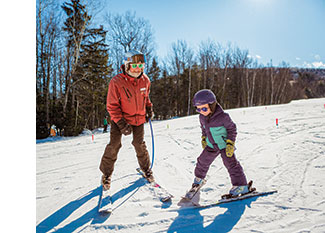 Mt. Abram is geared up for the season!
New expansions, operational upgrades and more winter recreational opportunities for adventure seeking guests this Winter! Mt. Abram lifts run weekly from Thursday through Sunday.
Lift Ticket Pricing:
•$55 Saturdays
•$35 Thursday & Friday
•$35 Sundays – Made possible through a partnership with L.L.Bean
On-Mountain Improvements for 2021-22
• New drive installed on main lift: Enhanced lift running operation, reliability, and safety.
• Upgraded snowmaking system: New pipes and equipment will make an immense improvement in snowmaking quality and efficiency.
• Additional community terrain park: Outfitted with a rails, jibs, and jumps.
• Mini-T-Bar is Back: With substantial upgrades to system.
• Uphill Expansion: Ski touring and split-boarding are a rapidly growing sector in the winter outdoor recreation industry and Mt. Abram is committed to embracing trends that will grow and evolve with the uphill community. (See Inclusive Ski Touring below).
Off-Mountain Amenities & Upgrades
• New Skating Rink: Added experience gives more winter recreation options for downhillers and the community.
• Expanding Parking: Provides extra room for customers to have their own space on arrival and departure.
Inclusive Ski Touring is offering 45 separate, open-to-all group ski tours, including a “Future Generations” program and a Women’s Touring group. Visit Mt. Abram and learn the joys of ski touring and split-boarding at little-to-no cost to individuals. Uphill ticket included with the tour package.
For more information visit www.inclusiveskitouring.com
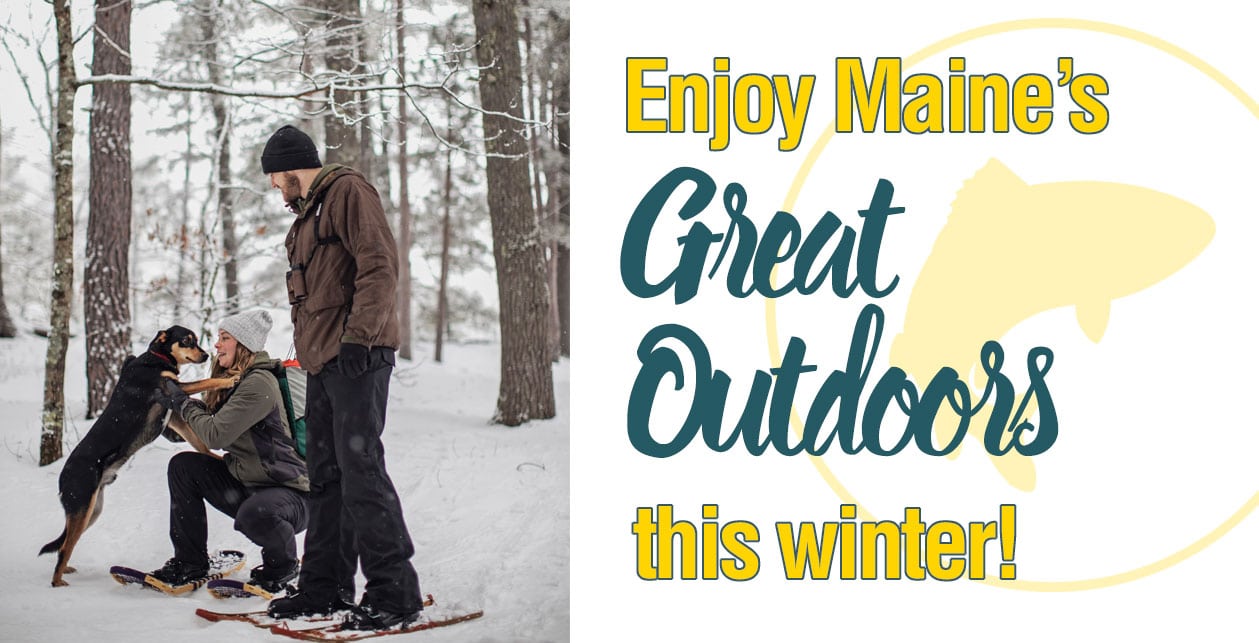
Maine Animal Tracks
 As the winter months continue, Maine Department of Inland Fisheries and Wildlife wants to remind and encourage Mainers to step out their back door and get outside! There’s so much this beautiful state has to offer even in the colder months, and you don’t have to go far to find something to do. While downhill skiing and snowmobiling are two of the more popular extra-curricular activities in our state, there are quite a few winter activities you can try out to get the whole family involved locally.
Identifying Animal Tracks
If you like scavenger hunts, identifying animal tracks might be the perfect winter activity for you! The snow is inevitable in Maine in the winter, so let’s embrace it. A fresh snow fall can provide a blank canvas for animal tracks, turning your backyard into a paw-print treasure hunt. Recognizing animal tracks is a creative way to get kids (and adults!) to be excited about spending time outdoors in the winter. You can even combine your animal tracking with winter walking, snowshoeing, or cross-country skiing for an exciting adventure!
Whatever activity you choose, always remember to dress accordingly, let others know where you’re headed, and have fun! Maine is a beautiful state year-round, so don’t let the cold weather deter you from enjoying all it has to offer! To download your own Maine Animal Tracks Pocket Guide, go to mefishwildlife.com/tracks.

Winter Fun in Portland
Pull on your longjohns and embrace the invigorating fresh air.
Cross-country skiers and snowshoers should check out the trails at Baxter Woods, Capisic Pond Park, Riverton Trolley Park, and Evergreen Cemetery Woods. Follow the trails from Oat Nuts Park to the Presumpscot River Preserve and you’ll be rewarded with a view of the Presumpscot Falls.
For groomed cross-country classic and skate skiing trails, check out the Riverside Snow Park at Riverside Golf Course.
Riverside Snow Park also has hills for snowboarding, sledding, and tubing. The same is true near the Back Cove at Payson Terrain Park. And Eastern Prom Hill is a great place to sled, tube, telemark ski, cross-country ski, and snowshoe.
Sharpen your blades, lace up your skates, and take a spin on the ice at Deering Oaks Park, Nason’s Corner/Breakwater School Pond, Payson Park and Riverside Snow Park. More information on where to skate is available here.

Snowmobiling for First-Timers: What to Know Before You Go
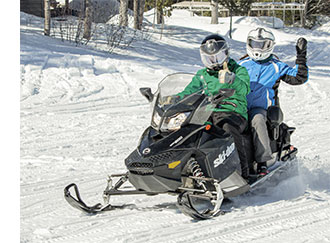 Another glorious Maine winter is upon us. Snow-covered fields and trails offer all the inspiration you need to get outside. Perhaps you’re looking forward to trying something new this year. One of the most exhilarating winter sports in Maine is snowmobiling. And the best part is that you don’t have to invest tens of thousands of dollars on a sled and equipment. There are more than a dozen Maine guides and businesses across the state that make it their mission to get newbies out on the trails all over the state. Whether you want to try snowmobiling with friends, with the kids, or as part of a guided excursion, there’s the perfect sled or snowmobile package for you.
 The best sledding in Maine takes place in the northern and western parts of the state, where some of the best snowpack can be found. Maine has the largest snowmobile trail network in New England with an Interconnected Trail System (ITS) of more than 4,000 miles of snowmobile trails to explore. Volunteers at 280 local snowmobile clubs work night and day to keep these trails groomed for riders.
There are a few safety concerns to consider before hitting the trail. While snowmobiles aren’t difficult to drive, you’ll definitely want to take it slow while you’re getting the hang of it. We asked some outfitters for their suggestions on what new riders need to know before hitting the trails, and here’s what they had to say:
Operate Your Sled Safely
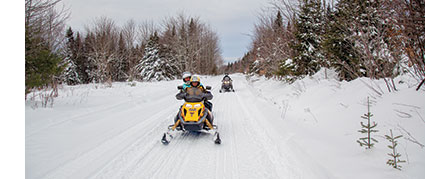 Just like driving a car, snowmobilers must always ride to the right of the trail at all times. And while your snowmobile might have a ton of power, you don’t have to test the limits. In other words, drive responsibly.
“Only go as fast as you feel comfortable,” said Lori Lemont from Flagstaff Rentals Inc. in Stratton.
“Speed is typically one of the main factors in snowmobile accidents,” added Scott Lee from the New England Outdoor Center (NEOC) in Millinocket.
 Lee suggested that first-timers hit the trails in a group with multiple sleds and learn hand signals to communicate. According to Lee, the leader of the group should know the following hand signals:
• Oncoming sleds: Left arm overhead bent at the elbow, moving back and forth pointing to the right. This means there are sleds up ahead and to be sure you are riding to the right so there’s room to pass.
• Stop: Left or right arm up in the air with the palm flat. This means stop. There may be a deer in the path up ahead, a scenic overlook, or time for a snack break.
• Right Turn: Left arm bent at the elbow.
• Left Turn: Left arm held out straight.
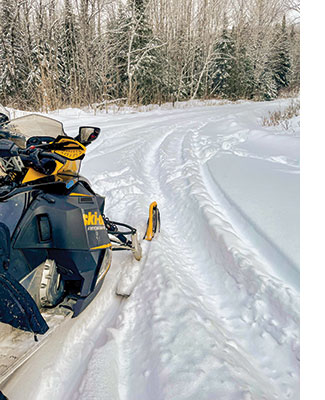 Above all, the biggest tip is to always ride sober. In the last decade, there has been an average of six fatal crashes involving snowmobiles per winter in Maine, according to Cpl. John MacDonald of the Maine Warden Service, with speeding and alcohol being the most common factors.
In addition, the standard for Operating Under the Influence (OUI) in Maine is the same on a snowmobile as it is in a car. If found guilty of operating under the influence, your license could be suspended and you could incur hefty fines.
Pack the Right Gear
The weather in Maine can change on a dime, so it’s important to check the weather report before any trip to make sure you have dressed appropriately and have the right gear packed.
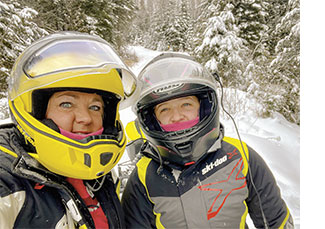
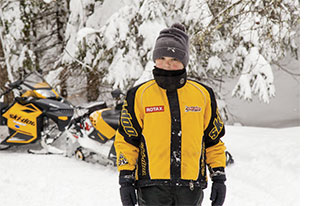
Having the right gear and clothing for the conditions Lee explained can make or break a snowmobile trip. For adults and children, wear underlayers (not cotton), top layers, a face mask, an insulated bib overall or snowsuit, gloves, heavy socks, boots, a helmet, and goggles.
Lee also suggests packing a first aid kit, fire starting gear, a flashlight, water, and snacks in case you get stuck or break down. Cell phone service may not work in western or northern Maine, so pack a durable map and always inform someone of your trip plan and return times. With so many miles of trails in some of the most remote parts of Maine, you don’t want to get stuck outside unprepared.
Get the Kids Involved
Snowmobiling doesn’t have to be an adults-only activity. Kids can join in the fun, too. “Short trips during good weather are the best way to get young children interested in the adventure,” Lee said. He suggested stopping for a trailside cookout and letting the kids help gather wood and be part of the fun.
Lemont said that Flagstaff Rentals offer safety belts for children that tether the child to the adult driver. Where they go, you go. If your child falls off the sled, you’re both connected. If you have older children or teenagers, they may be able to drive their own, smaller sled. If your children are inexperienced, they can saddle up with you on a double sled.
Whether you are looking for an afternoon excursion or an overnight adventure, consider a snowmobile trip in Maine this winter for a truly immersive experience.
Story by Melanie Brooks, a content creator and lover of Maine. She lives in Orono and works at the University of Maine.

Birding 101

Cedar Waxwing. Photo: Joyce Love.
Bird watching is a four-season event in Maine.
In the spring, look for the colorful Warblers that come through at ponds and small lakes around Maine. Summer is a good time to look for Osprey and Eagles that grace much of the shoreline and inland lakes. In the fall, some migratory birds make a return as they fly south and in the winter you might be lucky enough to see a Snowy Owl. There are some birds that can be seen all year long such as Cardinals, Blue Jays, Sparrows, various gulls, and of course, the Maine State bird, the Blacked-capped Chickadee.
Bird watching, or birding, can provide some wonderful, incidental benefits to be appreciated when outdoors. Taking in the fresh air, getting some light exercise, and improving your mood are the reasons most people take up this hobby. Plus it’s a wonderful activity for all ages, especially for children who may otherwise be indoors and too plugged in or less inclined to go outside to enjoy the wonderful gift of nature. In fact, a good place to start might be right in your own backyard.

Prothonotary Warbler. Photo: Joyce Love.
For some people a birding “Life List” acts like a journal that consists of notes of different birds seen along with the dates and location. You can find these Life List books for sale at your local bird supply store, bookstore, or online. It is also helpful to have an illustrated birding field guide that will help to identify each species of bird you see.

Bluebird. Photo: Joyce Love.
Some birders become familiar with the sounds of birds and this is called “Birding by Ear.” Some birds can be rather chatty, while others may only offer a conservative quiet peep. A free app worth installing in your smart phone is BirdNET that will record, analyze and then show you what bird made the call. Another free app to checkout is called Merlin, hosted by the Cornell Lab. This app has downloadable data for different regions of the country and you are able to look up and view images of birds and play actual sounds of more than 6,000 species.
Photography is a perfect companion to Birding and many people share a serious combined interest. Capturing the images of birds you have seen allows you to share them with others on social media pages dedicated to birding. So, grab your binoculars, pick up a field guide, download a free app, take your camera and go out and enjoy the wonders of nature.

Blue Winged Warbler. Photo: Joyce Love.
Here are some key resources to help you get started with becoming a birder.
• Ebird.org is a site where you can explore current birding hot spots and species to help you know where to find the birds you’re interested in seeing.
• Your local Audubon Society is a great resource. You can join in on bird walks with an Audubon guide where you can meet people that enjoy birding as well.
• Mainly Birds is an active group on Facebook that I help administrate, where anything from the outdoors is welcome. This is where you will find friendly people to help you with bird identification and more. I have met many photographers in different states and love seeing their photographs.
• Maine.gov/ifw is where you can find the Department of Inland Fisheries and Wildlife. This is also a great resource where there are links to learn about different species of birds and where to find them throughout the state.
Story & Photos by Joyce Love. Joyce has been a wildlife and landscape photographer for over 30 years. In addition, she has become an avid birder. Her love for photography and birds create a perfect combination for this hobby. She currently resides in North Yarmouth and is self-employed.


PLUS:
Maine Brew & Bev Guide
Maine Health & Wellness GuideAND:
The Activity Maine Newsletter
Adventure, news, reviews, wellness, and craft beer, emailed twice each month!


-


SUBSCRIBE | BREW & BEV | WELLNESS | CALENDAR | VIDEOS | PARTNERS | PREVIOUS PUBLICATIONS | SUBMISSIONS | NEWSLETTERActivity Maine
9 Susan’s Way, Windham, Maine 04062
Tel: 207-671-7230
Email: stan@activitymaine.com