


Majestic Mount Kineo
Listen. Mount Kineo is calling.
Mt. Kineo offers more than six miles of hiking trails with spectacular views overlooking Moosehead Lake. The golf course is simply the gateway to outdoor adventure.

The Indian Trail is the most direct and most strenuous way to reach the Mt. Kineo summit. The Bridle Trail offers another option, as this sign shows. Hikers can also walk along the shore by taking the Carriage Road. Photo by Sean Billings.
Mt. Kineo is situated on a 1,150-acre peninsula, which, though connected to the mainland by a narrow strip of land, has no road access. The only way to get there is by boat and that’s part of the fun. The golf course runs the Kineo Shuttle, a ferry, across Moosehead Lake from Rockwood from May to October. Golfers and hikers take a 10-minute ride over and the trip features a direct view of the mountain.
Plan your trip carefully and watch the time while you’re there. Shuttle hours vary by month. You want to be sure you’ll be done with your hike and ready to catch the boat back in time. If you miss the last shuttle, there is no other way back. You’re stuck!
If you go in June when the shuttle runs every two hours, this limits how long you can spend on the trails without the risk of missing the boat. The nice thing about being there in June, though, is you get a more serene experience because there are fewer people out on the trails.
The peninsula, part of Mt. Kineo State Park, offers four hiking trails, each geared to a different hiking experience, which can be combined for longer excursions.
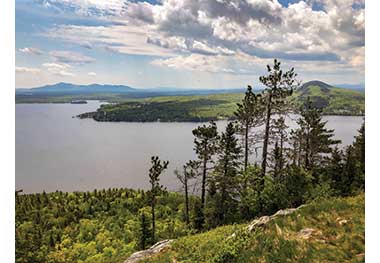
While the Indian Trail offers the best views, those taking the Bridle Trail still get the chance to see their surroundings from above. This photo was taken where the two trails meet right before the summit. Photo by Sean Billings.
The most difficult and most direct one to the summit is the Indian Trail, which takes hikers .9 miles along the open ledge and offers the best views. Those who want a somewhat easier climb can follow the 1.1-mile Bridle Trail. The hike follows the original fire warden trail, winding through the woods and offering more shade than the more strenuous Indian Trail.
Regardless of which trail you take, you can catch some astounding views at the point where the two trails meet on the way to the summit. Both trails will bring you to an old fire tower, which you can climb to enjoy a fantastic 360-degree view. Bring your camera but be prepared for the fact that no camera can capture the experience of looking around from the top of the tower.
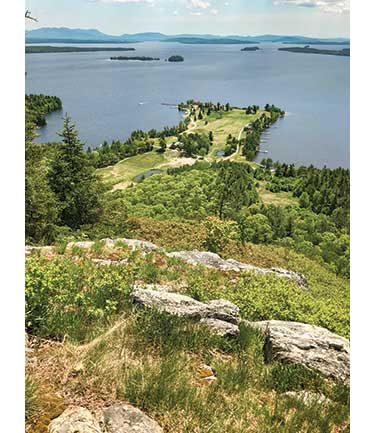
The Mt. Kineo Golf Course and Clubhouse look like a combination of a miniature diorama and a painting as seen from the summit. Photo by Johanna S. Billings.
Those who prefer not to climb can enjoy the easy 2.2-mile Carriage Trail, which takes hikers along the Moosehead Lake shore to Hardscrabble Point. If you enjoy a shoreline hike, but still want to see the summit, this trail connects to the 1.9-mile North Trail, which also brings you to the summit and the fire tower.
Even if you don’t golf, make sure to check out the view of the golf course from the summit. The view from so high above the course makes it look like a combination of a painting and a miniature diorama.
Depending on the boat schedule and how far you choose to hike, you may have time for lunch at the golf course clubhouse. Order food and beverages at a walk-up window and enjoy your lunch on the breezy porch.
This is a great day trip for anyone visiting the Moosehead Lake region and who wants to see Mt. Kineo up close rather than from a distance.
The Kineo Shuttle
The shuttle operates May 28 – October 11 and departs from the public boat launch in Rockwood. It runs every two hours in May and June, with the first departure at 9 a.m. and the final return trip leaving Kineo at 4:45 p.m. In July and August, it runs every hour with the first departure at 8 a.m. and the final return trip at 6:45 p.m. In September and October, it runs every hour from the first 8 a.m. departure to the final return trip at 4:45 p.m. The round-trip fee is $13 per person, cash only. Masks are required. For more information, call 207-534-9012 or find the full schedule at tinyurl.com/px84tka
Johanna S. Billings is a freelance writer/photographer based in Greenville. She and her husband, Sean, run The Lily Cat Antiques in Monson.

Lesser Known Land Trusts in Maine Have Much to Offer
When I moved to Maine in 2017, it didn’t take me long to realize that this state has an abundance of natural wonders but, more than that, how much the public access to this natural majesty is uncanny. Clearly, more people have realized that since the pandemic shut out their usual activities. The outdoors this past year, proved to be more than just a breath of fresh air for folks who didn’t normally hit the trails. Last summer, Maine’s state parks were overcrowded, forcing some places to actually close to the public. Chances are though, if you live in Maine, a public forest or land trust hosts a trail system within a short drive from home.
 “When many of the state parks closed last year, local trails and land trusts were overwhelmed,” said Brunswick Topsham Land Trust (BTLT) Executive Director Angela Twitchell. “There were new people who weren’t aware of their local trails, but, on the other hand, we weren’t prepared for it.” About half hour north of Portland, the Brunswick/Topsham area presents ample outdoor opportunities for convenient hikes and outdoor recreation. The BTLT is committed to preserving natural areas as well as providing public access. Overall, the BTLT hosts 25 miles of public trails within the towns of Brunswick, Topsham, and Bowdoin. Of all their 62 properties, not all have hiking opportunities since they also preserve wetlands and lease farmland.
Tarbox Preserve in Topsham has a lovely trail that loops through a dense forest with excellent views of the Cathance River. Twitchell joined me for a hike on this trail that eventually overlooked the river at high tide and said that this spot is a great place for kids to swim and play in the mud at low tide. Head of Tide Park in Topsham provides opportunities for light hiking, kayaking, and even picnicking along the Cathance River. Maquoit Bay and Woodward Point, both in Brunswick, provide excellent woodsy walks that lead to waterfront points where you can enjoy a dose of salty sea air with a snack or spot birds with your binoculars. Several wooded trails meander through the properties of the Brunswick Landing, the former Navy base.

The Kennebec Land Trust (KLT) hosts an impressive variety of hikes and outdoor experiences that consist of more than 70 properties within 21 communities in Kennebec County relatively near Augusta.
“We focus on the whole county, not by town, which is unique,” said Jean-Luc Theriault, KLT Stewardship Director. The KLT trails also experienced a large increase in usage last year due to the pandemic, prompting them to encourage the use of lesser-used, family-friendly properties, such as Gott Pasture Preserve, Rosmarin & Saunders Family Forest, and Curtis Homestead Conservation Area.
If you are looking to paddle to a trailhead, the region has an abundance of lakes, which provide opportunities for scenic hikes, swimming, and canoeing. Lake Cobbosseecontee has three island properties (Hodgdon, Horseshoe, and Perry Island Preserves). Androscoggin Lake has Norris Island and Perkins Woods Preserve has a rocky beach.
“All of our properties are unique and quaint in their own ways,” said Tyler Keniston, KLT Stewardship Manager. They also publish a hiking guide that is an excellent resource for outdoor enthusiasts.

Camping is allowed by reservation on a few KLT properties. Wakefield Wildlife Sanctuary in West Gardiner has two cabins for rent and Norris Island in Wayne has campsites and a rustic cabin. Summer reservations tend to book up quickly, so don’t hesitate to contact the KLT if you are interested. “We’re mostly in line with the state parks policies on camping and campfires,” said Theriault. “We don’t allow fires unless it is in a designated fire ring.” At the moment, BTLT is not offering camping; however, it is actively working on a plan to incorporate a few pilot campsites. “Camping is a great way for families to connect with nature in a different way than just hiking,” said Twitchell. “I am a strong advocate for testing it out.”
 Every region in Maine has some kind of unique gem. In western Maine, Kingfield Community Forest offers a variety of outdoor activities such as hiking and paddling around Shiloh Pond in 215 acres of protected, public land. Portland Trails provides residents with a trail network with more than 70 miles for hiking. The Maine Land Trust Network (mltn.org) is an excellent resource to find your local land trust.
Be sure to follow proper trail etiquette. Don’t litter. Take out what you carry in. These land trusts work tirelessly to provide us with the opportunity. It’s our responsibility to respect it.
John Breerwood has been magazine writing for over 10 years and enjoying the outdoors since childhood. He currently resides in Topsham, Maine. He teaches English at Lewiston High School and just recently published his first novel, Sinking Dixie, last year.

Moosehead Lake
Located over 1000 feet above the level of the sea lies world-famous Moosehead Lake. Surrounded by majestic mountain peaks, Moosehead Lake is a destination high above the rest. Home to an abundant population of moose, this part of Maine announces its grandeur at first site. Indian Hill at Greenville offers a stunning glimpse of this deep lake and the endless mountain range that lies ahead. A warm community of quaint shops, local eateries and waterfront gardens welcome you in downtown Greenville, Maine.
Guide Outposts are plentiful and can provide you with a northern exposure adventure of a lifetime. Moose safaris are best enjoyed by canoe and NorthEast Guide Service can provide you with the experience, knowledge and perfect setting for an authentic Maine wildlife tour or whitewater rafting trip along the rapids of the Penobscot & Kennebec Rivers. Fly fishermen of all ages and abilities can also take to the water. Wading, drift boat or inflatable raft, Wilson’s On Moosehead Lake can show you what they do best in the cool headwaters of the Kennebec River and Indian Pond.
Opposite Kokadjo on the west side, lies the town of Rockwood, the heart of Moosehead Moosehead Lake’s Rockwood location is where you will find Mount Kineo State Park which is accessible only by boat. Shuttle transportation can be purchased for a fee at the Kineo Docks. A beginner hike will lead you the fire tower at the summit of Mount Kineo, giving you a 360-degree panoramic view of the entire lake. Mount Kineo is also home to one of the most historic and scenic nine-hole golf courses in all of New England.
A short walk across the carriage trails leads you to Pebble Beach, the most beautiful beach on Moosehead. Pebble Beach sits under the 750-foot flint cliffs of Mount Kineo. A rope swing and smooth stones that you cannot find anywhere else set this beach apart from them all. Private sailing and lake fishing charters depart daily at Gray Ghost Camps. A sunset sail and an evening spent around the campfire is the perfect way to end any day on Moosehead Lake.
For 100 years, Maynard’s in Maine has provided their guests with outstanding wilderness experiences in addition to excellent bungalow-style cabin accommodations and great dining with wholesome fresh farm foods prepared to perfection. The Moosehead area offers outstanding landlocked salmon, trout, and togue fishing. Recently, Billy Maynard landed a 29.67 lb togue on Moosehead Lake measuring 41” long. His huge catch beats the old Moosehead Lake record set in 1961 of a 28-pound 12-ounce togue. The area’s large, pristine forests provide excellent cover for deer, bear, and small game and make it an outstanding hunting region. Here, guests at Maynard’s will find a real pearl in the North Woods. Maynard’s in Maine can be reached for additional information by phone: 207-534-7703, or on the web at: maynardsinmaine.com
Indian Hill Trading Post is a unique combination of a large sporting goods store with a complete super market and liquor department. This one-stop location offers a wide range of name brand gear and apparel, hunting and fishing licenses for residents and non-residents, firearms, fishing poles, and extensive outdoor supplies. Check out the vast clothing and shoe departments featuring Dansko, Muck, Merrill, Keen, Carhartt, Marmot, Patagonia and more. From groceries to gear, Indian Hill Trading Post has everything you need, including 24-hour Irving gasoline and diesel as well as propane refilling daily.
The Mahoosuc Way: Embrace Our Place
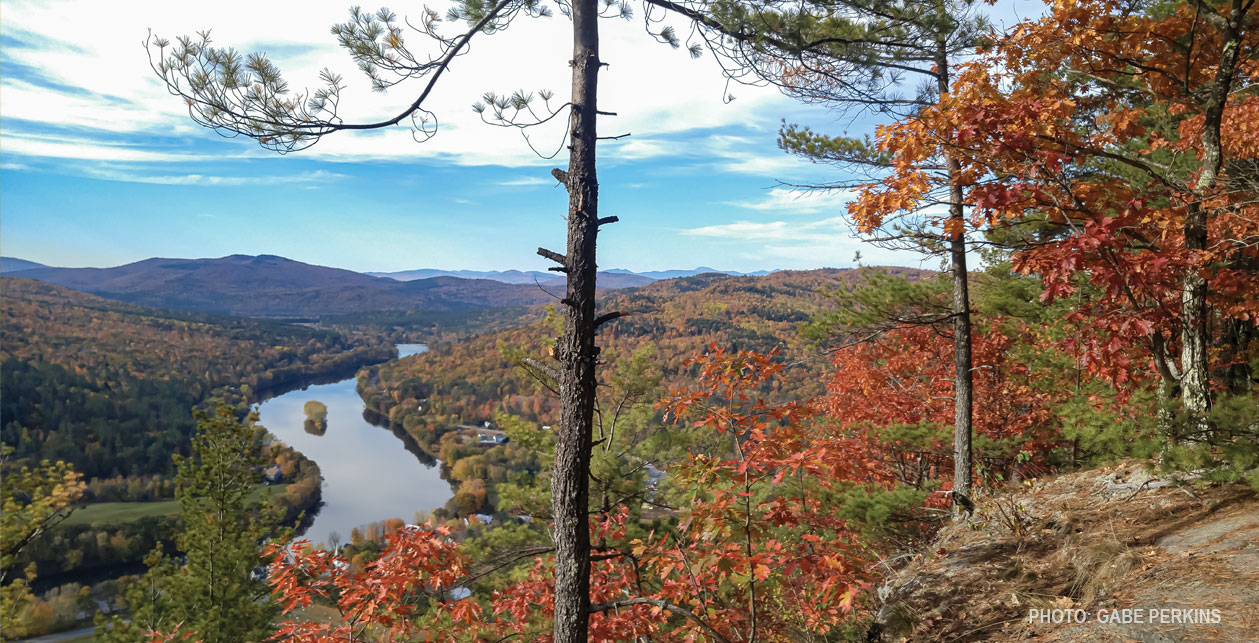
Just in time for the busy visitation season this past summer, the Mahoosuc Sustainable Tourism Committee supported the installation of new signs promoting The Mahoosuc Way: Embrace Our Place pledge at busy trailheads and boat launches throughout the Bethel region.
 This initiative is designed to communicate local values to newcomers, visitors, and locals to encourage collective action to protect and sustain the quality of place that makes the area an attractive area to live in and visit. By taking the pledge, visitors and residents express their commitment to behaviors rooted in five core values: Honor this Land, Explore Wisely, Show Respect, Cultivate Community, and Be Climate Conscious.
“We love hosting visitors on the Bethel Community Forest and other properties we manage,” said Gabe Perkins, Executive Director of Inland Woods + Trails. “We also understand that not all visitors are familiar with local traditions and the ways we all need to act to sustain our environment and communities. The Pledge is a great tool for engaging people both as visitors and as caretakers.”
The Pledge was developed, in part, in response to the challenges of overuse and crowding at popular trailheads. The new signs will be prominently placed to encourage users to be good stewards of the area’s natural, cultural, and community amenities.
Individuals, businesses, and organizations can sign the Embrace Our Place pledge by visiting: mahoosucway.com/our-pledge

Four Tips to Teach Your Child How to Ride a Bike
Learning to ride a bike can be nerve-wracking for a child just first starting out and for the parent who is running alongside, trying to keep up the encouragement. The good news is with a little practice and the proper mindset, it can also be fun and rewarding.

Greg and his daughter Kelsey
Last year, I taught my daughter Kelsey how to ride her bike. In less than two months, she went from teetering on her pink Shopkins bike with training wheels to riding in the virtual Trek Across Maine. When she turned nine, she quickly grew out of her first bike and upgraded to her current Pacific Cycle Bubble Pop 20″ Kids’ Bike. If you are looking to get your child on a bike this year, here are four helpful tips.
1. Build confidence first. Purchase a bike helmet that fits and makes your child feel good. Having a “cool” helmet builds his or her pride and self-assurance.
Based on your child’s age and ability, start with a tricycle or training wheels. Even if this seems too easy, it will set your child up for success to take the next step. Let your child tell you when he or she is ready to take off the training wheels.
Be sure to start in a large, flat parking lot or dead-end circle. Practicing in secluded areas will allow you both to focus and you won’t have to worry about traffic or other distractions.
2. Set the expectations. After the training wheels come off, the first fall is inevitable and part of the process. It is important to tell your child a couple of falls at first are going to be expected and that in itself, is not failure. Setting this expectation lets your child know it is OK to fall. Make sure your child is wearing wear elbow or knee pads to start. With every fall off the bike, your child develops trust in you as a teacher knowing these expectations.
3. Teach the rules of the road. As a parent, educating your son or daughter about the rules of the road before going out riding with friends is a critical part of keeping them all safe.
As your rider learns how to coordinate the handlebars with the pedals, it is important to teach your child the rules of the road. This includes everything from following traffic signs to using hand signals. A great way to practice is in settled neighborhoods, then in more populated areas, and eventually on busier streets and intersections. Every ride is an opportunity to learn increasingly complicated road rules.
4. Have fun! Cycling is a fun and safe activity for all ages. I have really enjoyed getting back on a bike again. Before starting the Trek Across Maine with Kelsey, I can’t remember the last time I rode my bike. The Trek Across Maine has motivated us to get outside, exercise more, and spend time together. I cherish each ride with her. Kids grow up so fast. During our rides we have enjoyed time with friends, seeing animals, and talking about random topics, including why bikes aren’t allowed at drive-thru restaurants, and of course our plans for the summer. I know I will look back years from now and not only remember our rides, but most importantly the trust and bond we built riding together.
Story & Photos by Greg Glynn

Acadia Mountain Guides Climbing School
GO CLIMB A ROCK!
Voted #1 family activity in Maine and rated the #1 activity in Bar Harbor every year since 2014 on Trip Advisor, the Acadia Mountain Guides Climbing School has been featured by Outside Magazine, National Geographic Adventure Magazine, Bill Green’s Maine Outdoors, CBS, The Travel Channel, and many more. Meet the guides and experience the AMGCS difference.
Can I Do It?
Can my family do it? Virtually anyone can rock climb. The guides at Acadia Mountain Guides say: “If you want to experience it, there are climbs for all ages and abilities in the park!” They regularly climb with clients from children to folks in their eighties. It’s a great activity for an individual, couples, families, or groups and requires only a moderate level of fitness.

Photo: Acadia Mountain Guides Climbing School
Is it safe?
Just like driving a car, rock climbing carries some level of risk, but is not an extreme sport. Professional guides focus on minimizing your risks and each year, thousands of people climb safely for the first time. Acadia Mountain Guides Climbing School outfits you with all needed safety equipment, such as helmets and harnesses, and provides you with expert instruction, guiding you every step of the way, so you can focus on the fun.
Who should I climb with?
In Maine, Acadia Mountain Guides has a long history of providing great instruction. They are accredited by the American Mountain Guides Association and the Professional Climbing Instructors Association. They have been under the same ownership since opening in 1993. AMG is led by internationally-licensed IFMGA guide Jon Tierney. Jon is one of 138 U.S. guides to achieve the IFMGA award, signifying the pinnacle of achievement for guides. The guides who work for Jon say he has been at the forefront of guide education for more than two decades. They appreciate his mentorship, attention to detail, and desire to constantly improve the delivery and safety of climbing instruction. You will too!
CLIMBING & ADVENTURE CAMPS
Since 2001, Acadia Mountain Guides Climbing School has offered summer camps to youth 9-18. All camps encourage self-discovery, responsibility, fitness, and fun! The outdoors is a great classroom and ideal for teaching decision-making, personal confidence, and teamwork, while learning new skills and having a blast. AMGCS was one of the first climbing schools in the nation to offer specialized rock climbing camps staffed by certified instructors and guides in a summer camp format. Have all the fun and excitement of summer camp with the reassurance of professional leadership!

Quiet Waters: Discover the Path Less Paddled
There’s nothing quite like Maine summer days on the water and nights under canvas. Combine the two and you’ve got the recipe for an unforgettable trip. More secluded than traditional campgrounds – with the opportunity to bring a little more gear in your boat than you could backpack – paddle camping is an accessible adventure for families and beginners alike. With a little planning and knowledge, canoe and kayak camping trips grant paddlers access to some of the most secluded and idyllic camping spots in Maine.
Portland
The many islands of Casco Bay make a beautiful backdrop to Portland’s city skyline. However, there’s much more here than a view – a paddling trip to one of the bay’s islands affords a whole new perspective. “Experiencing the sights and smells of the ocean from the vantage point of a kayak is exciting enough,” said Portland Paddle owner and co-founder Zack Anchors. “But here in Casco Bay we also have fascinating islands, forts, and lighthouses to explore” Portland Paddle orchestrates ocean adventures from the East End Beach each summer. While the busy waters of Casco Bay may look intimidating, guides are trained to lead paddlers of every ability. “Our team of guides take things to the next level. They are skilled at making sure each person has the support they need to have fun paddling on the ocean.”
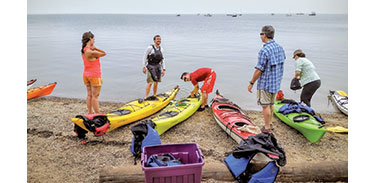 Day trips are available morning through sunset, but the really memorable experiences are made over multi-day adventures. “We offer a three-day trip called the Casco Bay Traverse that gives a great introduction to kayak camping on the Maine coast,” said Anchors. “There are so many islands to explore that each trip is different. That said, Jewell Island and Whaleboat Island are two of our favorite islands for camping – with gorgeous scenery, lots of wildlife and amazing oceanside campsites.” Groups generally paddle 10 miles or less each day, though it varies a lot based on current and wind conditions. Portland Paddle guides also cook nourishing meals, so you can relax and explore the islands after coming ashore.
The experience of moving with wind and water between the islands creates a profound connection that you just can’t find from a ferry or powerboat. Anchors recalled a foggy morning paddle on the bay that was etched into his memory: “There was deep silence and glassy calm waters. I heard the puffing sound of porpoises breathing through their blowholes. We spotted the triangular fins of the pod arching above the waterline nearby, just as an osprey dove and grabbed a fish from the water.”
Midcoast
 Ready for your own adventure? Gather your gear and head to Richmond, where you can launch your boat into the Kennebec River. From there, you can paddle downstream toward Merrymeeting Bay, where the Kennebec and five other rivers flow into the bay (although this area doesn’t front directly onto the ocean). This confluence of fresh and salt waters is a rare and abundant source of life, particularly for waterfowl and fish such as Atlantic salmon, shad, and sturgeon that travel upstream to spawn. The unusual geology also means the river is tidal and subject to strong currents. It’s essential you check tide charts before starting out, and try to stay along the edge of the bay’s quieter western shore.
Once you’ve had your fill of adventure, return to the calm shores of Swan Island, which fills the mouth of the Kennebec. This four-mile-long island houses 10 Adirondack shelters overlooking a large field and a dock, which can be booked in advance for a small fee. Light a campfire or wander the seven miles of trails that wind through the island and explore the island’s historical structures, which once housed a community of around 100 farmers in the 1800s.
Rangeley Lakes Region
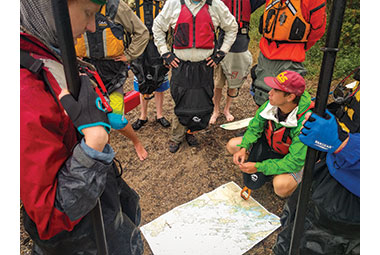 If you’re ready to get out there and explore, the Rangeley Lake region is a must-see destination for canoe camping. Explore any of the six major lakes by day, and when you’re ready to set up camp, find your way to South Arm at the very tip of Little Richardson Lake. The main site is situated on the sandy shoreline with 38 paddle-in sites scattered as far as 15 miles up into Greater Richardson, through a section called The Narrows.
The scale of the lake should not be underestimated, especially if you’re planning to paddle way out. Ensure you pack plenty of water and warm clothes. Hug the shoreline as you paddle, where the winds that can rush down the lake won’t exert such a great force on your boat – and always wear a PFD.
Pick a spot within sight of the beach and main campground or cover some distance to find total seclusion in stunning surrounds of spruce, cedar and white pine beside crystal clear waters. Spirit Island campsite in the very middle of Little Richardson Lake is unbeatable for views and a deserted island feel.
With a stretch of water behind you and the sun low overhead, it’s a little easier to leave worries on the mainland while you soak up the peace and serenity that an offshore camping adventure can provide.
— Story by Saisie Moore. Saisie is a freelance writer and gardener living on Munjoy Hill in Portland.
Leave No Trace
Practice Leave No Trace Principles to Preserve the Environment and Experience for All
New to the Maine outdoors this summer? Don’t forget to pack the seven “Leave No Trace” principles when you go!

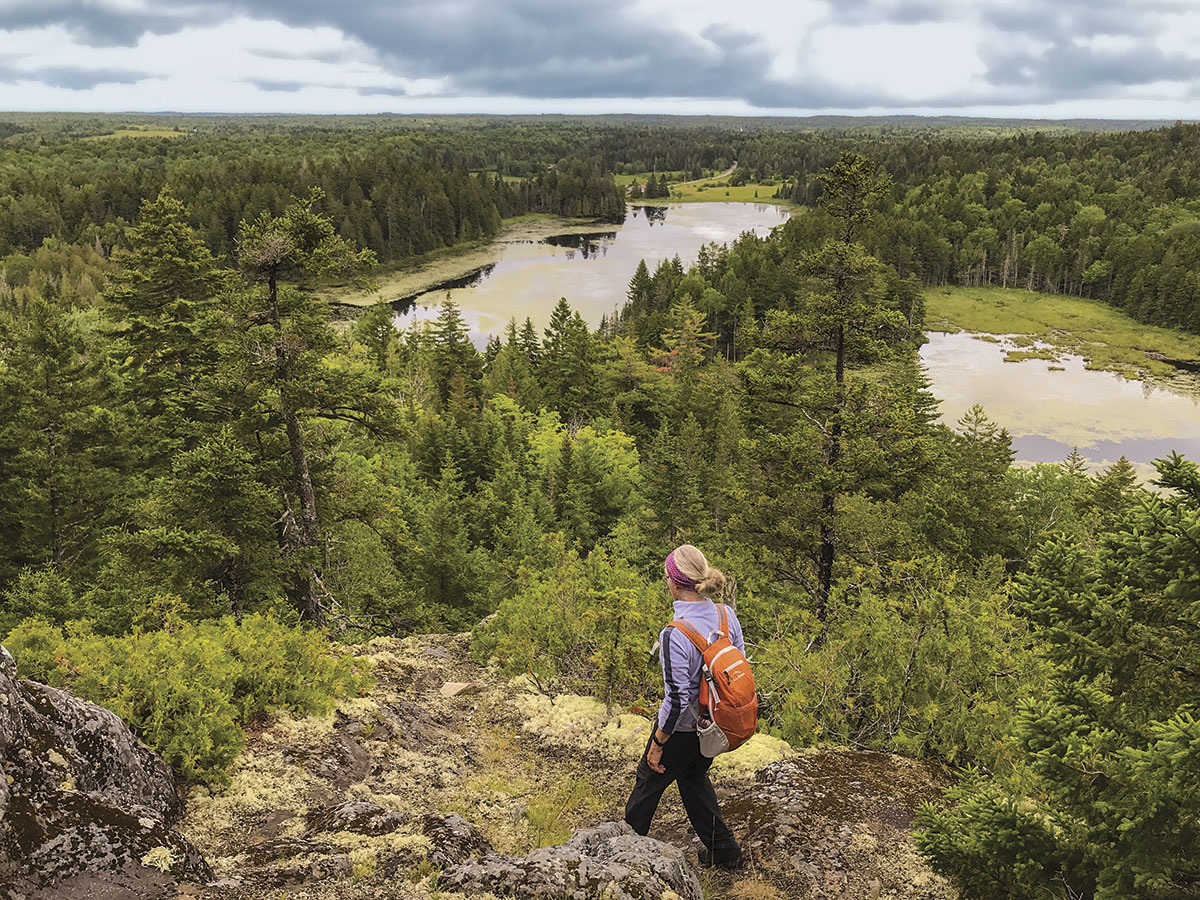
Empty trails like this were a little harder to find in this pandemic year.
The woods and waters of Maine have seen a monumental increase in outdoor recreation use during the continuing pandemic. This summer and fall promise more of the same with a burgeoning number of new and existing enthusiasts looking to spend some quality time outside enjoying Mother Nature’s bountiful beauty.
Your environmental impact matters, and so does that of every other hiker, paddler, mountain biker and camper out there. The combined effects are enormous and have land managers struggling to keep up with an unprecedented demand that is stressing the carrying capacity of trails, facilities and trailheads across Maine.

Discarded masks were a signature item of trash along trails this past year.
Trash—such as candy bar wrappers, soda bottles, face masks, tissues, and toilet paper—was just one of the big issues that plagued Maine’s popular outdoor spots last year. Doggy poop bags, random camping, illegal fire pits in fragile places, stripping bark from birch trees, hacking down live trees for firewood, cutting switchbacks, building stacks of rock art, and leaving behind painted rocks were other examples of irresponsible practices that had deleterious physical and visual effects and diminished the experience for everyone.
 It is critically important for everyone who ventures into the Maine woods to know the seven Leave No Trace principles which encourage the responsible, safe, and enjoyable use of our outdoor resources. As far as possible, we should each practice these ethics and, where appropriate, gently educate and inform others on the impacts of their less than desirable choices and what the positive alternatives are.
The first principle, “Plan Ahead and Prepare,” sets you on the right course for following through with the other six. By maximizing your safety and comfort with good preparation you help to minimize your impact on the environment and others.
When you “Travel and Camp on Durable Surfaces,” you’re sticking to bare rock, dry grass, sand, and established trails and campsites. In designated areas, concentrate use; in pristine areas, disperse use.
To “Dispose of Wastes Properly,” pack out all the garbage you pack in, plus that of others less considerate.

If there’s a privy – however primitive – along the trail, use it.
Disperse the gray water from dish washing and tooth brushing away from fresh water sources. Human waste needs to be dropped into a properly dug cat hole in the organic layer of the soil. Carry and use a small trowel designed for this purpose; a stick or the heel of your shoe won’t do. Always pack out leftover food and containers, used toilet paper, menstrual products, and used baby wipes. If there’s a privy available, please use it.
The fourth principle is easy: “Leave What You Find.” Just remember the old slogan of the 1970s, “Take only pictures; leave only footprints.” Just imagine if everyone took home a souvenir.
The best way to “Minimize Campfire Impacts” is to forego a fire and use a camp stove. If you must have a fire, use an established fire ring and keep the blaze small.

Illegal fires and firepits are not only an eyesore, but represent a real potential hazard to the woods.
“Respect Wildlife” by keeping your distance and never feeding them, not only for your own safety, but also to minimize their dependence on human interaction. Hang your food out of critter reach and keep your pets properly leashed.
Finally, “Be Considerate of Other Visitors” by limiting noise (loud conversation, radios) and lights (lanterns, headlamps).
Each one of us acting a good steward will help our officials do their job of protecting our precious natural resources. Being courteous and respectful always will ensure that you’ll be welcomed back to the special outdoors places you know and love.
For more info on the full spectrum of Leave No Trace outdoor ethics, visit lnt.org.
— Story & Photos: Carey Kish of Mt. Desert Island. Carey is an avid beer drinker, editor of the AMC Maine Mountain Guide, and author of AMC’s Best Day Hikes Along the Maine Coast.

How to Rewild Ourselves
Can the remedy to stressful modern lives be found in the forest?
If you’ve spent less time on familiar downtown streets and more time among the trails and trees of our public lands during the past year, you’re not alone. Everyone from seasoned hikers to the previously outdoor-averse responded to a collective yearning for space and calm. Now that we’re learning there’s more to our excursions than just exercise and good views, what knowledge and practices can help us maintain an essential connection to the wild – and in doing so, improve health and well-being?

Forest Therapy Guide and Registered Maine Guide Jeanne Christie leads a forest bathing outing. Photo courtesy Jeanne Christie.
Into the Woods
When John Muir wrote of “going into the forest to lose my mind and find my soul,” he may have inadvertently described the art and science of shinrin yoku, the Japanese characters for “forest bath.”
Forest Therapy Guide and Registered Maine Guide Jeanne Christie discovered this concept of forest bathing for herself one day during a trail run. “Several years ago, I found myself stopped on the trail, looking around at the trees with a sudden desire to stay still,” she said. After completing certification training with the Association of Nature and Forest Therapy, Christie launched her business, Connect to Wilderness, and began leading guided forest therapy sessions throughout southern Maine. “If there’s a therapist, it’s the forest,” she said. “I’m simply a guide.”
Each forest bathing session is unique, tailored to the woods, season, and the group participating since “not everyone is ready to talk to the trees,” said Christie.

Showshoeing with Registered Maine Guide Jeanne Christie. Photo courtesy Jeanne Christie.
“The practice is to really experience where you are on a deeper level,” she said. “I’ve heard it described as ‘outward meditation’.” The idea of healing and release simply through quiet reflection in a forest may seem abstract and intangible, but Christie assures it’s a human necessity. “We’ve lost our connection to the wilderness, but it’s still within us,” she said. “Simply taking time to be in nature without agenda or motive—just an existential awareness of the forest—is an ancient instinct we’ve learned to suppress.”
Her guidance for a self-directed forest bath? “Gently push aside your ‘talking’ mind,” she said. “Experience the world through all of your senses. Close your eyes and observe the world through your other senses. Your mind will start talking again – don’t worry. Just allow these thoughts to move past. Wander at will!”
“The land is the real teacher.
All we need as students is mindfulness.”
ROBIN WALL KIMMERER

Mitchell Rasor at Cape Elizabeth, Maine
Wild Swimming
For a truly immersive experience in nature, plunging into the bracing waters of Maine’s rugged coast is an invigorating approach – if you can work up the nerve. Yarmouth landscape architect and artist Mitchell Rasor first gave it a try seven years ago, while looking for a new focus during a difficult period. Today, it’s a year-round practice he describes as “mentally and physically cathartic.’’ Even while traveling for work, Rasor is always on the lookout for a nearby swim spot. “I try never to miss a day between May and October,” he said.

Cousins Island. Photos courtesy Mitchell Rasor.
Whether you opt for a lake, river, or ocean, there are inherent risks associated with wild swimming. “You need to be aware of your surroundings, tides, waves, temperature, and currents,” said Rasor. “You’re aligned in the moment. It’s just you and the water.”
Gaia’s Classroom

Building lodging. Photo courtesy Way of the Earth.
In the woods beyond East Blue Hill, a collective of alternative educators have established Way of the Earth, an inclusive school that teaches Earth skills and ancient arts – from hide tanning to herbalism to survival skills. Students “find skills to build an everyday functional and positive relationship with the surrounding world, and other people,” said instructor and outdoor educator Colby Smith. Much of the curriculum is centered around a Whole-Earth approach that recognizes the need for indigenous knowledge and leadership at its forefront. “We’ve been creating increasingly ‘artificial’ human-constructed environments without considering most other species in this process,” he said. “Indigenous or native people have always lived with the natural world at the forefront of their consciousness.”
Sign up for short courses in traditional arts, or if you’re feeling a real wanderlust, sign up for their immersive five-month summer wilderness program at an on-site primitive village.
For anyone with a desire to rewild but without months to spare, Smith offers some practical advice: “Returning to health and balance is a process – it takes time. Make small, but sure steps. Plug in to the place you live and learn about the interconnections that exist there. Quietly observe how this stream has slowly shaped the ground and how the mink is influenced by these shapes as it travels upstream. Observe how you too are shaped by the mink’s movements, the sound of the stream, and the shape of the land. Rather than just moving through nature, look around, move slowly, start a relationship with something there. Maybe it could use your help. Maybe it could help you.”
TAKE A BREAK DURING YOUR WORKDAY
|
— Saisie Moore is a freelance writer and gardener living on Munjoy Hill in Portland.
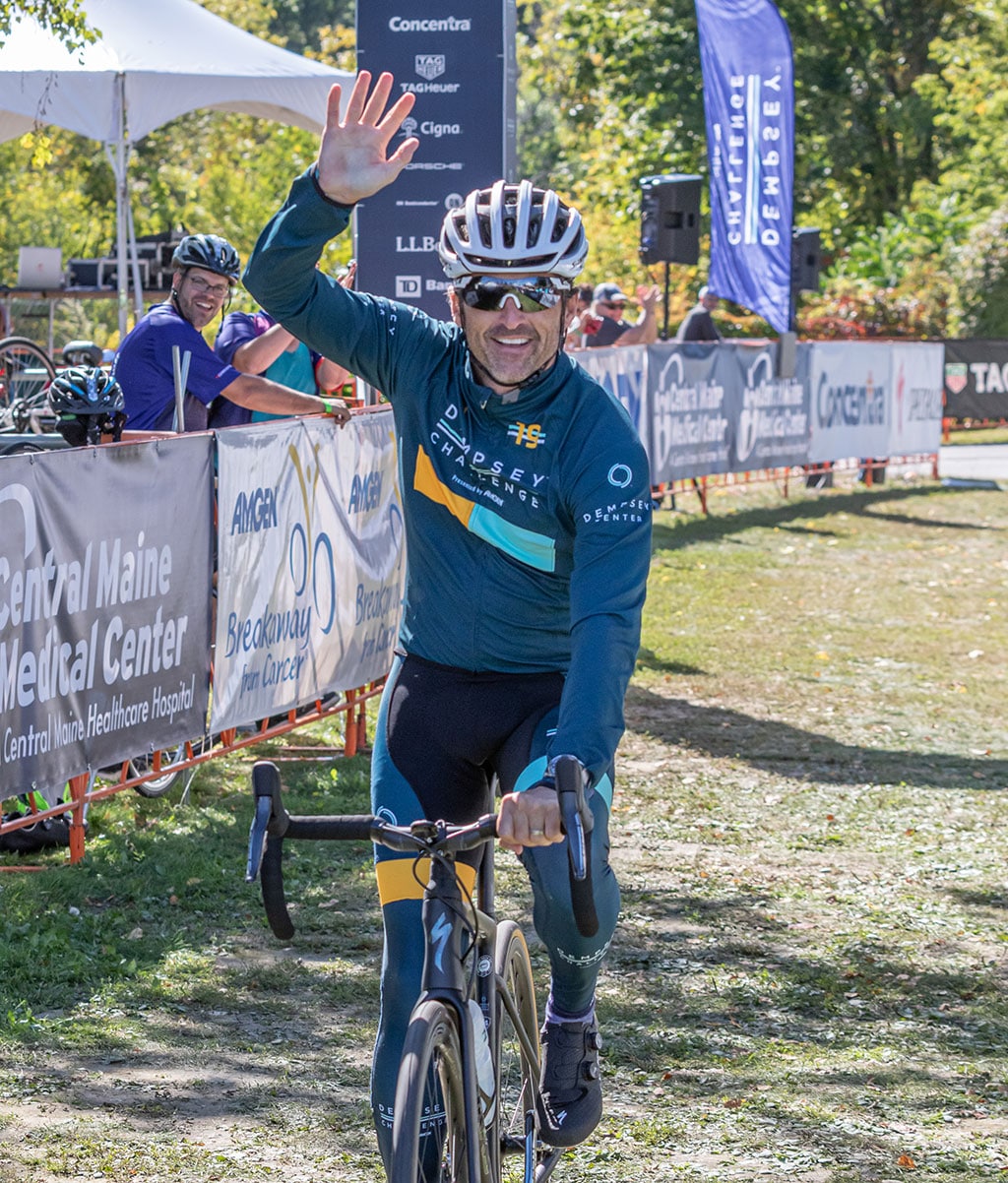
Keeping Our Spirits Up with Patrick Dempsey
Patrick Dempsey, most known for his role as neurosurgeon Derek “McDreamy” Shepherd in Grey’s Anatomy is a Mainer through and through. Born in Lewiston, he grew up in the nearby towns of Turner and Buckfield before becoming an actor and starring in the 1980s films Can’t Buy Me Love and Loverboy. His ties to Maine continue to this day. After his mother was diagnosed with cancer, he founded the Dempsey Center for Quality Cancer Care with physical locations in Lewiston and South Portland, and now virtually through Dempsey Connects. And since 2009, he has organized the Dempsey Challenge, an annual run, walk, and cycle fundraising race to benefit those impacted by cancer at the Dempsey Center.
As we head into the second year of a pandemic, we at the Maine Health & Wellness Guide are looking to inspire people to find their way back to health. We were lucky to catch up with Patrick Dempsey on what he does to stay positive, healthy, and balanced.
Can you tell us what you are up to now and what your days in the pandemic look like?
PD: Simple days in the beginning. It was nice to be home and not flying or working— just being together as a family, and then trying to comprehend what was going on with so much unrest and fear. We truly just lay around the house and then as things progressed, a bit more anxiety grew. We then tried to keep ourselves busy with positive activities such as walks, cooking as a family, along with a lot less TV!
What outdoor recreational activity do you enjoy most in non-winter months to stay active and find fun?
PD: Cycling, walks, hikes, time at the beach.
When you’re having a down day, what’s something that picks you back up?
PD: I have found that quieting my mind really helps when I’m feeling a bit off. I found the simple task of sitting in front of a fireplace does the trick for me.
Do you practice any meditation techniques, and if so, what are they?
PD: I do. It’s important to have time to collect yourself in the morning. I like to wake up before anyone else in the house, let the dogs out, and then sit quietly. I’ve been reading a lot of Ryan Holiday’s works and have found his interpretation of stoicism to be incredibly beneficial.
Being from Maine, what particular strength of Maine’s people do you connect with most?
PD: Mainers care deeply for their communities, and when people are in need, they step up and help generously. They are always last to accept help themselves, but the first to help others. I see this with the incredible support at the Dempsey Center. The Dempsey Challenge always highlights the strength of community and love that the state shows.
What is your favorite area of Maine to visit for adventure and makes you feel refreshed?
PD: The woods of Maine. The coast. I love the wildlife and Maine’s natural beauty.
This past year, Activity Maine embarked on a campaign called #keepourspiritsupmaine designed to encourage leaders in Maine to reveal how they found positive ways to handle the pandemic. Check out more of our Industry Snapshots on the craft brew, distilling, and Maine outdoor industries in the blog series located in the sidebar.
Jumping Rope to Run Faster

Jumping rope requires quick rebounds that recruit mainly the foot muscles and joints, a type of plyometric training that would be useful for runners. A recent study in the International Journal of Sports Physiology and Performance set out to investigate this. A group of amateur runners were randomly assigned to an experimental group or a control group. The experimental group modified their regular warm-up routine to include jumping rope for two to four sessions per week with a total time of 10 to 20 minutes per week. After 10 weeks, runners in the experimental group had greater arch stiffness and statistically significant improvement in their three-kilometer run time compared to the control group. So, for runners looking for a way to increase their speed, incorporating jump rope training drills into their warmup may be a great way to do so. Dust off that jump rope and get going!
By Heidi Walls, MD
Reference article: García-Pinillos F, Lago-Fuentes C, Latorre-Román PA, Pantoja-Vallejo A, Ramirez-Campillo R. Jump-Rope Training: Improved 3-km Time-Trial Performance in Endurance Runners via Enhanced Lower-Limb Reactivity and Foot-Arch Stiffness [published online ahead of print, 2020 Mar 12]. Int J Sports Physiol Perform. 2020;1-7. doi:10.1123/ijspp.2019-0529

Healthy Habits to Help You Ride Out the Pandemic
 The COVID-19 pandemic has proved to be paradoxical for our health: it’s engendered unhealthy habits by incentivizing some people to eat and drink more, exercise less, and consume more screen time in a sedentary state. Conversely, it also fomented a new culture of self-improvement, inspiring people to learn how to eat healthier, and pushing them to use their free time to exercise more and get in shape.
Here’s how you can be part of the latter category if you wish to stay happy and healthy as we continue to ride out the pandemic.
One way to pursue improved mental and physical health is by reducing screen time. Excessive screen time can languish our mental and physical health in a myriad of ways, according to Dr. Jordan Porter, a lecturer with UMaine Orono School of Nursing.
“Prolonged exposure to blue light emitted from computer screens and hand-held devices can suppress natural melatonin production, which upends our circadian rhythm and often results in sleep difficulties,” said Porter. In addition, he said, “Some research has found an association between exposure to blue light at night . . . and chronic conditions like obesity, heart disease, and diabetes.”
To consciously seek out ways to buffer your screen time, consider picking up a book. The Maine Book Club/discussion group on Facebook is a great resource to get an idea of what to read, with nearly 2,000 members in the group offering recommendations and forming small, online book clubs.
Another way to combat the adverse health effects of the pandemic is to head outdoors, where again, we can divorce from our screens and delight in all the vitamin D the sun offers, which studies show improves both physical and mental health.
“It’s time to trade blue light for regular bright light, especially in the mornings,” Porter advised. “Exposure to regular bright light during day hours can help maximize alertness, maintain a regular circadian rhythm, and counteract the winter blues, also known as seasonal affective disorder (SAD).”
There’s a slew of ways to be active outdoors in Maine, whether it’s mountain biking the 50+ official trails throughout the state, paddling along a lake or river, or hiking in the western Maine mountains. Visit NEMBA.org for mountain bike trails and visit mainetrailfinder.com to browse hikes all over Maine.
Since the pandemic hit, online fitness and meditation classes have multiplied. According to a 2021 Bloomberg article, “How COVID-19 Has Permanently Affected the Fitness Industry,” 72 percent of fitness club-owners currently offer on-demand and livestream group workouts. Some workouts are pre-recorded and allow for pausing or rewinding, and others are live-streamed to emulate group exercise.
One Portland-based cycling studio has mastered the balance of online and socially distanced in-person training. Réve Cycling Studio moved their business entirely online in March 2020 and launched an on-demand platform, Réve At-Home. Once the weather got warm, Réve Cycling switched to in-person mode, offering to meet clients at Thompson’s Point and cycle next to the ocean.

Cycling class at Reve Cycling Studio
“Beyond all of the amazing mental and physical health benefits that come with working out, we go beyond that and really tap into the community through human connection,” said Marketing Manager Meghan Courchesne.
Another critical struggle for people who are pandemic-weary, is staying apart from friends and family, and the toll that has taken on their mental and emotional health. It’s still important to socialize—safely. With the warmer weather here, spend time with family or friends by enjoying the outdoors together at a state park such as Wolfe’s Neck Woods in Freeport, or visiting a restaurant or brewery with outdoor seating. With more people being vaccinated each day, we’ll soon be able to spend more time with each other, safely.
At the end of the 1994 prison film The Shawshank Redemption, the character, Red reads a letter from his escaped fellow inmate Andy Dufresne: “Remember Red: Hope is a good thing— maybe the best of the things—and no good thing ever dies.”
Even though it feels like we’ve been crawling through a 500-yard tunnel of horror this last year like Andy did, just remember: hope is a good thing, maybe the best of things, and it’s on the other side of this tunnel.
— Story and photos by Garrick Hoffman, a freelance photographer, writer, and graphic designer based in Auburn. Visit his website at GarrickHoffman.com. Follow him on Instagram at @garrickhoffmanphotography and @garrickhoffmanportraits and on Facebook at @Garrick Hoffman Photography.

Get Your Outdoors On at UMF
As the 2020/2021 season has unfolded in a time of uncertainty, the UMaine Farmington snow sports teams have been prepared. The snow sports program consists of three different disciplines: Alpine, Freeride, and Nordic. All programs begin early, with dryland training for the Alpine Team; aerial sessions for the Freeride Team, and for the Nordic Team, miles of practice to get into shape for the winter sport they love.

Photo: Braden Brothers
UMaine Farmington snow sports participate in the Reynolds Division as a part of the United States Collegiate Ski & Snowboard Association and normally compete all around Maine and in New England against many other Division II & III schools. Although UMF’s teams on average are smaller than most, they are a force to be reckoned with. What they lack in team numbers, they make up for in dedication and on-hill talent.
At the beginning of the season, I spoke with Shawn Russell, the university’s freeride/snowboard coach. He explained why athletes choose to pursue their collegiate career at UMaine Farmington. “In my opinion, we have the best venue in the northeast, with Sugarloaf and Sunday River resorts close by, Saddleback reopening, and Titcomb Mountain minutes from campus,” he said. “The access is unmatched.” The snow sports coaches are geared up to provide for athletes amidst this season of uncertainty. “I can promise that we will make it the best season that we possibly can,” said Russell.
The geographic location of UMaine Farmington immerses its students in the heart of Maine’s western mountains. Nestled in the small town of Farmington, the snow sports teams are in reach of world-class destinations. For any snow sports athlete, it is easy to fall in love with this region of Maine while earning an affordable education.
UMaine Farmington has seen its fair share of success throughout history: podium finishes, trips to national events, and graduates earning positions in the snow sports world post-graduation. The university had established a plethora of knowledgeable and inspiring coaches who are focused and determined to provide all athletes with the opportunity to compete on a local, regional, and national level.
Sam Scheff, a UMaine Farmington senior and the captain of the Freeride/Snowboard Team, has already had the opportunity to compete in regional and national competitions through the Team. In his sophomore year, he earned the chance to join a select few in Jackson Hole, Wyoming, where he competed in his first national competitions. “Being on the Freeride Team is about representing the university,” said Scheff. “The best part is forming relationships with like-minded people, and the on-hill and academic support from the great coaches here at UMaine Farmington.”
The UMaine Farmington Alpine Team is headed by coach Andrew Willihan. In the past several years with the UMaine Farmington program, Willihan has rebuilt the Team to regional and national standards. Those who want to compete at a collegiate level ought to consider UMaine Farmington, according to Willihan. “The right choice is based on being  able to gain a high-quality education for unbeatable value, while training and racing at the best resorts in the northeast,” he said. “For any skier who wants to be treated with the respect that matches their dedication to the sport, you cannot find an athletic department and team that can do what we do.”
— Story by Avery Boucher, Activity Maine’s Fall/Winter Outdoor Media Content internship student from the University of Maine Farmington

XC Skiing: A Fun Way to Get Active
Check out this Activities Guide of Maine video production by our UMaine Farmington intern, Avery Boucher.
Cross-country skiing is an activity that all abilities can take part in as it is as intensive as you make it. Whether you are looking to go out for a casual stroll or pack on the miles, XC skiing is a great way to get some outdoor exercise safely. “If you have never XC skied before, don’t worry, neither had I,” said Boucher. “With a group of friends, we were able to have some good laughs and spills, but by the end of the day, we all had it down and can’t wait for our next time out.”
As the weather has been unseasonably warm this winter, take advantage and go to your local rental shop and pick up a pair of XC skis or dust off that old pair of skis that have been sitting in the basement for way too long. With a quick online search, you can locate a rental shop and trails near you and be out on the trails in no time.
With Maine’s abundant, beautiful scenery it is no labored task to get outdoors and stay active.
We’ll see you out there!

Explore Moosehead
MAJESTIC MOOSEHEAD LAKE, with its 400 miles of undeveloped shoreline, surrounding mountain peaks and expansive views, provides an inspiring backdrop to escape the everyday fast pace of life. The winter months and the abundant snowfall open up a spectacular opportunity to explore back-country trails and frozen bodies of water. Wildlife abounds on trails and it is common to see moose, deer, wild turkeys and many woodland animals up close and personal.

Photo: Katahdin Woods & Waters National Monument
If cross-country skiing or snowshoeing is your winter sport choice, you can enjoy your passion on nearly 25 miles of packed and groomed trails in the pristine Katahdin Woods and Waters National Monument. Cross-country skiing, snowshoeing, and winter hiking are permitted on ungroomed trails, but it is recommended that only experienced individuals use the ungroomed trails as the terrain is often steep and uneven.
Snowmobiling is allowed on approximately 22 miles of trails within the National Monument. Local snowmobile clubs are responsible for the management of snowmobiling activities. For current local trail conditions check out The Maine Snowmobile Association’s website www.mesnow.com.
Ice fishing and winter camping opportunities are also available in the Katahdin Woods and Water National Monument. Reservations are required for walk-in primitive tent sites, and lean-tos, as well as for bunk space in primitive community huts. Winter campers must be prepared for extreme weather conditions, follow a carry in/carry out trash policy, and only use downed wood gathered in the area by the campsite for a campfire. To register contact Susan Adams, EPI Recreation Manager: 207-852-1291, lunksoos@gmail.com

Photo: Maine Dogsledding Adventures
Consider treating yourself to an authentic winter adventure of dogsledding. Contact Don and Angel Hibbs, expert dog mushers, who operate Maine Dogsledding Adventure at (207) 731-8885 or by email: info@mainedogssledding.com. Special ½-day to 2-day tours provide a unique experience for families and winter adventurers. Mush 10-12 miles in the wilderness near Baxter State Park. Everyone gets a turn on the runners driving the sleds!
You have great choices in accommodations for your winter getaway in the Katahdin Region. In Medway, you will find the Gateway Inn conveniently located just off the Interstate. Your canine companions are always welcome. Enjoy a continental breakfast before you head off for a day on the trail. River’s Edge Motel lets you sled from your door to an on-site trail, After a day on the trail. Enjoy a sensational pizza or some other wonderful appetizing dish prepared on the premises to please any palate. In Millinocket you will find the iconic Katahdin Inn & Suites. Here you will enjoy a large heated pool, hot tub, exercise, game and play room area, plus a business center, if you need to check back on work while away. You will also enjoy a continental breakfast, and yes, they are pet friendly.
For more information contact: The Katahdin Region Chamber of Commerce: 207-723-4443.


PLUS:
Maine Brew & Bev Guide
Maine Health & Wellness GuideAND:
The Activity Maine Newsletter
Adventure, news, reviews, wellness, and craft beer, emailed twice each month!


-


SUBSCRIBE | BREW & BEV | WELLNESS | CALENDAR | VIDEOS | PARTNERS | PREVIOUS PUBLICATIONS | SUBMISSIONS | NEWSLETTERActivity Maine
9 Susan’s Way, Windham, Maine 04062
Tel: 207-671-7230
Email: stan@activitymaine.com